

Camping on the beach is an unforgettable experience, but it requires specific gear to handle salt, sand, and shifting winds. This comprehensive guide helps you pack like a pro to ensure your 2026 coastal adventure is comfortable, organized, and stress-free.
There is something magical about falling asleep to the rhythmic lullaby of ocean waves. By 2026, beach camping has become one of the most popular ways to disconnect from the digital noise and reconnect with nature. However, the beach is a unique environment that presents challenges you would not find in a forest or a mountain meadow. Dealing with fine sand, corrosive salt air, and shifting tides requires a specialized approach to your packing list.
If you are planning your first beach trip, you might be worried about getting sand in your sleeping bag or dealing with the constant breeze. Don’t worry! With the right preparation, beach camping is a breeze. This guide will walk you through exactly what to pack for camping on the beach to ensure your trip is relaxing, clean, and full of sunshine.
Key Takeaways
- Choose Sand-Specific Gear: Opt for equipment designed with mesh or specialized stakes to manage loose sand and strong coastal breezes.
- Protect Against the Elements: Salt air and intense UV rays require heavy-duty sunscreen, polarized eyewear, and robust wind-resistant shelters.
- Prioritize Moisture Management: Use waterproof bags and silica gel packs to protect electronics and clothing from high humidity and unexpected tides.
- Master the Setup: Understand tide charts and wind patterns before picking your campsite to ensure safety and comfort throughout the night.
- Leave No Trace: Beach ecosystems are fragile; pack out everything you pack in to protect local marine life and coastal beauty.
Choosing the Right Shelter for Coastal Conditions
Selecting the Perfect Tent
When you are thinking about what to pack for camping on the beach, your tent is your most important asset. Regular camping tents can be a nightmare in the sand. You should look for a tent with a low profile to minimize wind resistance.
In 2026, many manufacturers offer “sand-friendly” tents that feature integrated floors and extra-long sand stakes. These stakes are much wider than standard metal pegs, allowing them to gain traction in loose, shifting ground.
If your tent has a mesh top, make sure it comes with a high-quality rainfly. The ocean breeze can whip up sand, and a tight-knit rainfly acts as a shield to keep the interior of your tent clean. Always aim to set up your tent on firm, flat ground well above the high-tide line to prevent any midnight flooding surprises.
Essential Ground Cover
Sand has a way of finding its way into everything. Packing a high-quality mesh ground cloth or a dedicated sand-free mat is essential. Mesh mats allow sand to fall through the weave rather than sitting on top, keeping your living area much cleaner. Place this mat outside your tent door to act as a “sand trap” where you can leave your footwear before entering your sleeping quarters.
Mastering the Art of Sleeping on the Sand
Comfort and Insulation
Even in the summer, the ground near the ocean can get cold at night. A self-inflating sleeping pad provides a necessary thermal barrier between you and the cool, damp sand. In 2026, the technology behind sleeping pads has advanced significantly; look for lightweight, closed-cell foam options that do not absorb moisture or retain sand particles.
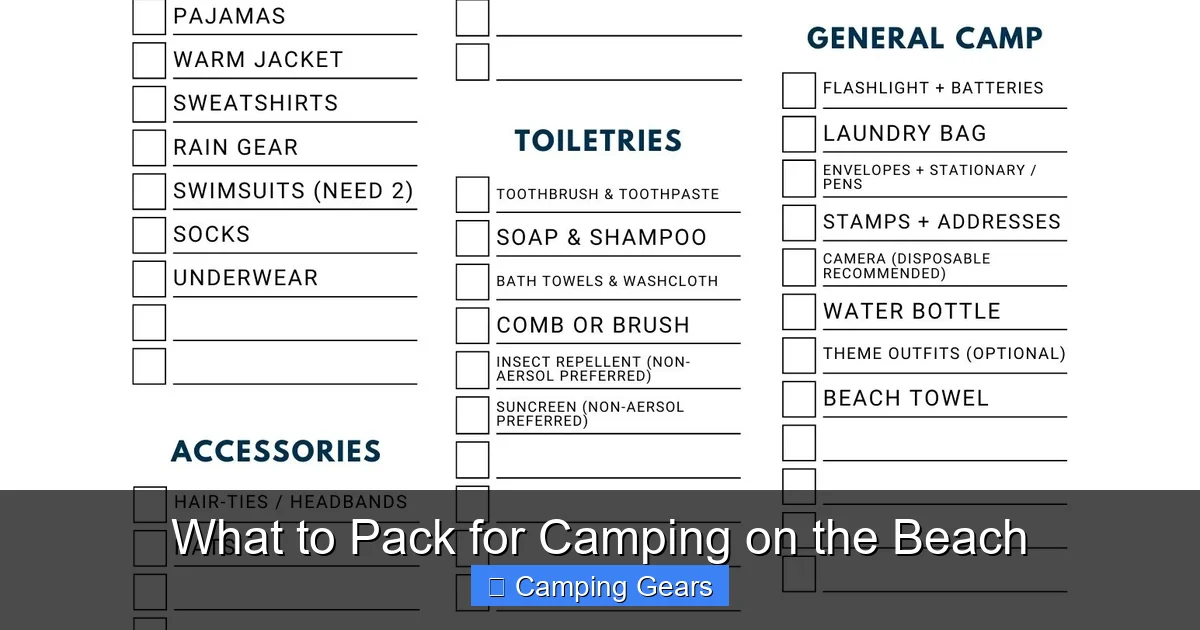
Visual guide about What to Pack for Camping on the Beach
Image source: midmichiganmoms.com
Managing Humidity
The air near the coast is often very humid, which can make your sleeping bag feel damp by morning. Pack a synthetic sleeping bag instead of down if possible. Synthetic insulation retains its loft and warmth even when it gets slightly wet. If you must bring a down bag, store it in a waterproof compression sack until the very moment you go to sleep to keep it bone-dry and fluffy.
Sun, Salt, and Wind: Essential Protection
Clothing and Apparel
What to pack for camping on the beach often comes down to protecting your skin. The sun reflects off both the sand and the water, doubling your exposure to UV rays. Wear lightweight, long-sleeved clothing made from UPF-rated fabric.
These materials are breathable and keep you cool while shielding you from harsh radiation. Don’t forget a wide-brimmed hat that can be secured with a chin strap; coastal gusts are famous for stealing hats right off campers’ heads!
Gear Maintenance in Salt Air
Salt is corrosive. It can ruin zippers and damage electronics quickly. Pack a small bottle of silicone lubricant for your tent zippers and a microfiber cloth for your gear. Before you head home, wipe down your camping stove, chairs, and metal tools to prevent rust. Investing a few minutes in maintenance will help your gear last for years of future beach adventures.
Cooking and Hydration by the Sea
Stove Selection
Cooking on the beach is fun, but sand is the enemy of a clean meal. Choose a compact, wind-resistant camping stove. Wind screens are mandatory accessories here. Without one, you will find it nearly impossible to boil water for your morning coffee. Always keep your cooking setup on a stable table or a tray to keep the sand away from your ingredients.
Hydration Strategy
It is easy to get dehydrated in the sun and wind. Bring more water than you think you will need. While you are there, the heat and physical activity will increase your intake requirements. Store your water in insulated jugs to keep it refreshing throughout the day, and always double-check your storage container seals to ensure no sand gets into your drinking supply.
Organization and “Sand-Proofing” Your Campsite
Storage Solutions
Use airtight, hard-shell plastic bins to store your food, clothing, and gear. Soft bags are prone to getting sand in the zippers, which eventually leads to them jamming. Hard bins are easy to wipe clean, stackable, and keep your gear organized inside the tent. Label your bins so you know exactly where everything is when the sun starts to set.
Lighting and Power
For your 2026 camping trip, pack solar-powered lanterns. They are perfect for beach environments because you can leave them on your gear table during the day to charge. If you bring a portable power bank for your devices, ensure it is water-resistant. The combination of salt spray and electricity is dangerous, so keep all gadgets inside a dry bag when not in use.
Safety and Environmental Responsibility
Tides and Weather Monitoring
Always pack a printed tide chart or have a reliable app ready to go. The ocean can change rapidly, and your campsite should always be well above the high-tide line. Watch for “sneaker waves” and never leave your gear unattended near the shoreline.
Leave No Trace
The beach is a delicate ecosystem. When considering what to pack for camping on the beach, include durable trash bags. Pack out everything—including food scraps, gear fragments, and micro-trash. Help protect the dunes by staying on marked paths and avoiding walking on protected vegetation. When we take care of the beach, the beach takes care of us.
Camping on the beach is a rewarding experience that stays with you long after the sand has been washed away. By following these tips and packing the right gear, you ensure that your 2026 coastal escape is smooth and memorable. Remember: keep it organized, stay protected from the sun, and respect the tides. Happy camping!
Frequently Asked Questions
How do I keep sand out of my tent?
The best way to manage sand is to use a dedicated mesh ground cloth and a “sand trap” mat outside your tent door. Always brush off gear and remove footwear before entering, and keep your tent windows zipped tight when not in use.
Is it safe to camp directly on the sand?
Yes, but always check local tide charts to ensure you are well above the high-tide line. Also, be mindful of coastal winds and ensure your tent is properly staked down with specialized sand stakes for stability.
What should I do if my gear gets covered in salt spray?
Salt is corrosive, so wipe down your metal equipment and zippers with a damp, fresh-water cloth as soon as possible. Doing this regularly during your trip will prevent rust and keep your gear functioning smoothly.
Do I need a special tent for beach camping?
While you don’t necessarily need a brand-new tent, one with a low profile and extra-long sand stakes is highly recommended. Standard stakes will not hold in loose sand, and a low profile helps the tent survive strong coastal winds.
How do I protect my electronics from the ocean environment?
Store all electronics, including phones and cameras, in waterproof dry bags or sealed plastic containers. The combination of humidity and salt air can damage sensitive components quickly, so keep them protected whenever you are not actively using them.
What is the most important thing to pack for a beach camping trip?
Sun protection including high-SPF sunscreen, a wide-brimmed hat, and polarized sunglasses—is the most critical item. The sun’s intensity is significantly magnified by the reflection off the water and sand, making burns happen much faster than elsewhere.