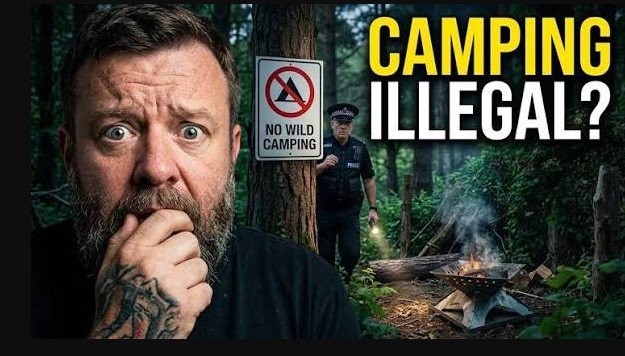
Wild camping laws vary wildly depending on your location, making it essential to research local regulations before you pitch your tent. While some regions offer complete freedom, most areas require adherence to strict “Leave No Trace” principles to keep the practice legal and sustainable for future adventurers.
There is nothing quite like the feeling of waking up to the sunrise over a mountain peak, miles away from the nearest campsite shower block or crowded RV park. The dream of wandering into the woods, finding a flat spot, and setting up your tent is a classic outdoor fantasy. However, as the popularity of outdoor recreation grows in 2026, many people are asking the same question: is it illegal to wild camp?
The short answer is that it depends entirely on where you plant your pegs. The world is divided into regions where wild camping is a protected right, regions where it is a total legal grey area, and regions where it is strictly prohibited. If you want to avoid a knock on your tent door in the middle of the night, you need to understand the nuances of the land you are visiting.
Key Takeaways
- Understand Local Jurisdictions: Laws change significantly between countries, states, and even local municipalities, so always verify the status of the land before settling in.
- Leave No Trace is Non-Negotiable: Whether wild camping is legal or technically tolerated, you must leave the site exactly as you found it to avoid bans and environmental damage.
- Rights of Access Vary: In places like Scotland or Scandinavia, the “Right to Roam” makes wild camping legal, whereas, in most of England and the US, it is heavily restricted or prohibited.
- Safety First: Never camp on private property without permission, as this is almost always trespassing and can lead to legal trouble or hostile confrontations.
- The Golden Rule: If you are unsure about the legality of a specific spot, it is better to seek out a formal campsite or public land designated for dispersed camping.
The Global Landscape: Where is Wild Camping Allowed?
To answer “is it illegal to wild camp” properly, we have to look at the map. Geography dictates the law. In some parts of the world, your right to connect with nature is written into the constitution, while in others, you are essentially a trespasser the moment you leave a designated trail.
The Nordic Model and Scotland
If you live in or visit countries like Sweden, Norway, or Scotland, you are in luck. These regions operate under the “Right to Roam.”
In Scotland, for example, the Land Reform (Scotland) Act 2003 grants the public the right to be on most land for recreational purposes, including camping, provided you follow a strict code of conduct. You aren’t just allowed to camp; you are encouraged to do so, as long as you respect the environment and the privacy of others.
The Reality in England and Wales
In contrast, much of England and Wales does not have a “Right to Roam” that includes camping. In these regions, wild camping is generally considered illegal without the express permission of the landowner. While there are pockets of tolerance such as in parts of Dartmoor National Park the default stance is that you are technically trespassing if you pitch a tent on private land.
North American Dispersed Camping
If you are traveling in the United States or Canada, the terminology changes slightly. We often call it “dispersed camping” rather than “wild camping.” On federally managed lands, such as National Forests or Bureau of Land Management (BLM) areas, you are usually allowed to camp for free outside of a formal campground. However, this is not a universal right. Always check the specific district’s regulations, as 2026 has seen tighter restrictions in popular high-traffic zones.
Understanding the Rules of Private vs. Public Land
The most common reason people get into trouble is failing to distinguish between private and public land. Many hikers assume that if a piece of forest looks empty, it must be public property. This is a dangerous assumption.
Why Private Land is Off-Limits
Most land on Earth is owned by someone, whether that is a farmer, a timber company, or an individual property owner. If you camp on private land without asking, you are trespassing. In most jurisdictions, the police can remove you, and you could face fines.
More importantly, it ruins the relationship between landowners and the hiking community. If a landowner finds trash or human waste on their property, they are much more likely to put up “No Trespassing” signs that affect everyone else.
Identifying Publicly Accessible Space
Learning to use digital mapping tools is a vital skill for any camper in 2026. Apps that show property boundaries allow you to see exactly where public land ends and private land begins. If you cannot confirm that the land is public, you should assume it is private. When in doubt, call the local forestry office or park ranger station. They are usually happy to tell you where you can legally sleep.
The Importance of “Leave No Trace” Principles
Even if you find a spot where it is not illegal to wild camp, you are only allowed to stay as long as you act as a good steward of the land. The legality of wild camping often hinges on whether the public is behaving responsibly. If a specific area sees a spike in illegal fire pits, food scraps, or toilet paper litter, local councils will almost always implement a complete ban.
Managing Waste Responsibly
If you are wild camping, you must be prepared to carry out everything you bring in. This includes your food packaging, gear scraps, and, crucially, your human waste. In 2026, the standard for backcountry hygiene has been raised. Many hikers now use portable waste bags (often called “WAG bags”) to pack out their waste, especially in fragile alpine environments where digging a cathole is not sustainable or legal.
Respecting Wildlife and Vegetation
Wild camping means you are a guest in someone else’s home. Keep your campsite small. Do not clear away vegetation to make a flat spot for your tent, and try to camp on durable surfaces like rock, gravel, or dry grass rather than fragile wildflowers. If you are camping in a sensitive area, move your tent every night to minimize your impact on the ground cover.
Why “Illegal” Isn’t Always “Enforced”?
You might talk to a seasoned hiker who tells you, “I’ve camped there for years and never had a problem.” While this might be true, it does not mean the activity is legal. It simply means it is tolerated. This is the difference between a “right” and a “privilege.”
The Danger of Relying on Tolerance
Tolerance is a fragile thing. When you camp in a place where it is technically prohibited, you are gambling with the local authorities. If you are quiet, hidden, and leave no sign, you might get away with it.
However, if you are discovered, you have no legal leg to stand on. You are responsible for your own legal risk. In high-density areas in 2026, rangers are increasingly active in patrolling “unofficial” spots, especially during peak seasons.
When Illegal Turns into a Fine
Authorities do not typically arrest people for camping, but they do issue hefty fines. In popular national parks or protected nature reserves, these fines can be substantial. Beyond the financial cost, being caught can lead to your gear being confiscated or you being banned from the park entirely. It is rarely worth the stress of wondering if someone is going to report you overnight.
Tips for Choosing a Legal Wild Camping Site
If you want to enjoy the great outdoors without the constant fear of breaking the law, focus on finding locations where wild camping is permitted. There are plenty of legal ways to get your fix without risking a fine or a confrontation.
Focus on “Wild” Designated Spots
Many areas that prohibit traditional wild camping have designated “wild” sites. These are often small, remote pitches that lack toilets or running water but are legally sanctioned. These are perfect for campers who want a bit of peace and quiet while still staying on the right side of the law.
Use Established “Dispersed” Areas
If you are in the United States, focus on National Forest lands. Most of these areas have a “Dispersed Camping” policy. The golden rule here is to look for existing fire rings or spots where the vegetation is already worn down. By using an existing site, you protect the surrounding nature and ensure you are camping in a place the forest service has deemed appropriate.
The Power of Permission
If you have your heart set on a specific piece of land that is private, reach out to the landowner. You would be surprised how often a polite email or a knock on the door can secure you a legal night of camping. Explain that you are an experienced camper, you follow Leave No Trace principles, and you have no interest in making a mess. Many farmers are happy to let you stay if you demonstrate that you are respectful.
The Future of Wild Camping in 2026 and Beyond
As we look further into the future, the pressure on our wilderness areas is only going to increase. The question “is it illegal to wild camp” will likely become more restrictive as more people seek to escape the noise of modern life. Protecting the privilege of camping in the wild requires us to be the best versions of ourselves when we are outdoors.
We are the guardians of the trails. If we want to keep the right to wake up to a mountain sunrise without a formal reservation, we must prove that we can do it without destroying the landscape. Treat every piece of public land as if it were your own backyard, and treat private land with the respect it deserves. When we act with integrity, we keep the spirit of adventure alive for the next generation of explorers.
Ultimately, while you might find many spots where you *can* camp, the best experience comes from camping where you *know* you are welcome. Do your research, respect the signs, and prioritize the health of the planet. When you do that, every night under the stars becomes a success.
Frequently Asked Questions
Is it illegal to wild camp in all National Parks?
Most National Parks have strict regulations prohibiting wild camping outside of designated campgrounds to protect fragile ecosystems. Always check the specific park’s website for “backcountry camping” permits, which allow for a legal version of wild camping in specific zones.
What is the difference between wild camping and dispersed camping?
The terms are often used interchangeably, but “dispersed camping” is a formal term used primarily in North America to describe free camping on public land outside of established campgrounds. “Wild camping” is a broader term used globally that can range from legal backcountry trekking to technically illegal overnight stays.
Can I be fined for wild camping even if I hide my tent?
Yes, you can be fined if you are discovered by a ranger or landowner, regardless of how well you have hidden your tent. Authorities in many popular areas in 2026 are using drones and increased patrols to monitor for illegal camping activities.
Are there apps to help me find legal spots?
Yes, several apps and websites are excellent for identifying public land and legal campsites. Tools like iOverlander, Gaia GPS, and various government land-management maps are essential for verifying if the area you are considering is open to camping.
What should I do if I am caught wild camping in a restricted area?
If you are caught, stay calm, be polite, and admit you made a mistake. Most rangers are more likely to let you off with a warning if you are honest, cooperative, and willing to pack up and move immediately.
Is sleeping in my car considered wild camping?
Yes, sleeping in a vehicle is often subject to the same local laws as pitching a tent. Many jurisdictions have specific “no overnight parking” or “no car camping” ordinances that apply to all types of wild camping, so verify the local vehicle laws as well.