
A good camper roof sealant can help prevent small cracks and gaps from turning into costly water leaks. RV roofs face rain, strong sunlight, temperature changes, and road vibration, so the sealant needs to stay flexible and maintain a strong bond. The right product also depends on the roof material, such as EPDM, TPO, fiberglass, or aluminum.
The sealant type should match the job. Self-leveling lap sealants work well around vents, skylights, and other horizontal roof openings because they spread across the surface. Non-sag sealants work better on vertical edges and sidewall joints because they stay in place. Seam tapes can also help with long seams and certain repairs. Always check your camper’s roof material and the product label before applying sealant.
This guide covers five of the best sealants for camper roofs for different roof materials and repair needs. We considered adhesion, flexibility, weather resistance, UV protection, application type, compatibility, ease of use, and overall value. These picks can help you maintain your camper roof and reduce the chance of water entering through worn seals.
5 Best Sealants For Camper Roof
| Image | Title | Best For | Link |
|---|---|---|---|
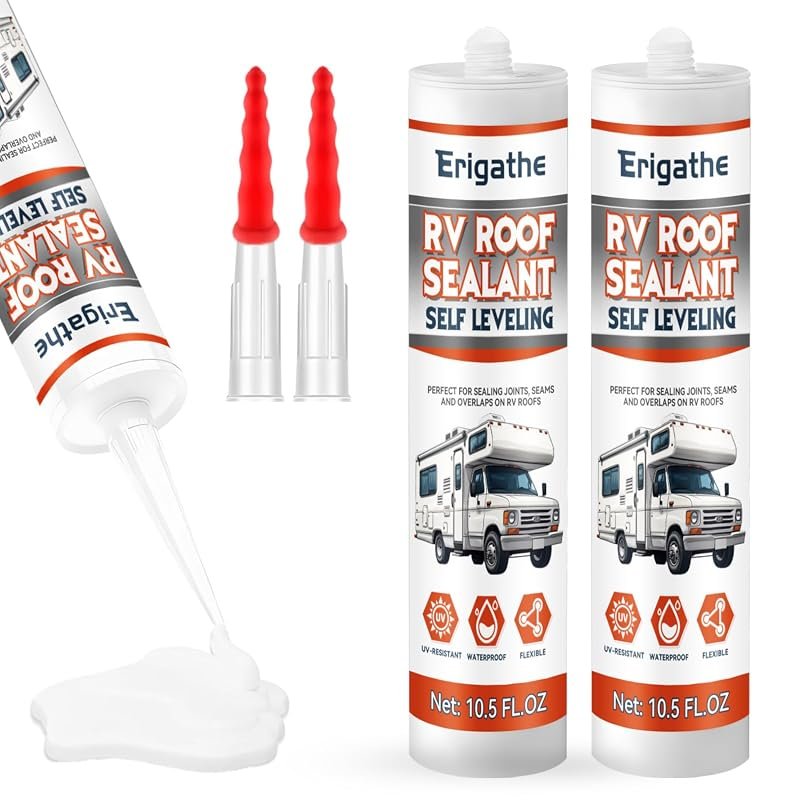 |
Self-Leveling RV Roof Sealant | The self-leveling rv roof sealant lap caulking for campers and trailers, waterproof, heavy-duty… more | View on Amazon |
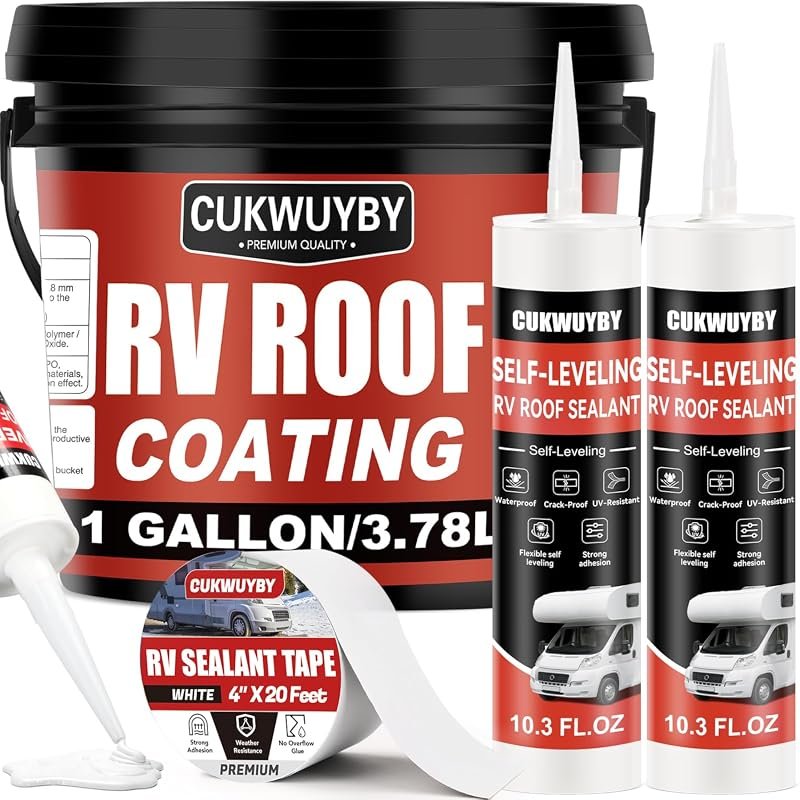 |
RV Roof Sealant Coating | The waterproof rv roof sealant and protective coating for campers, motorhomes, and travel trail… more | View on Amazon |
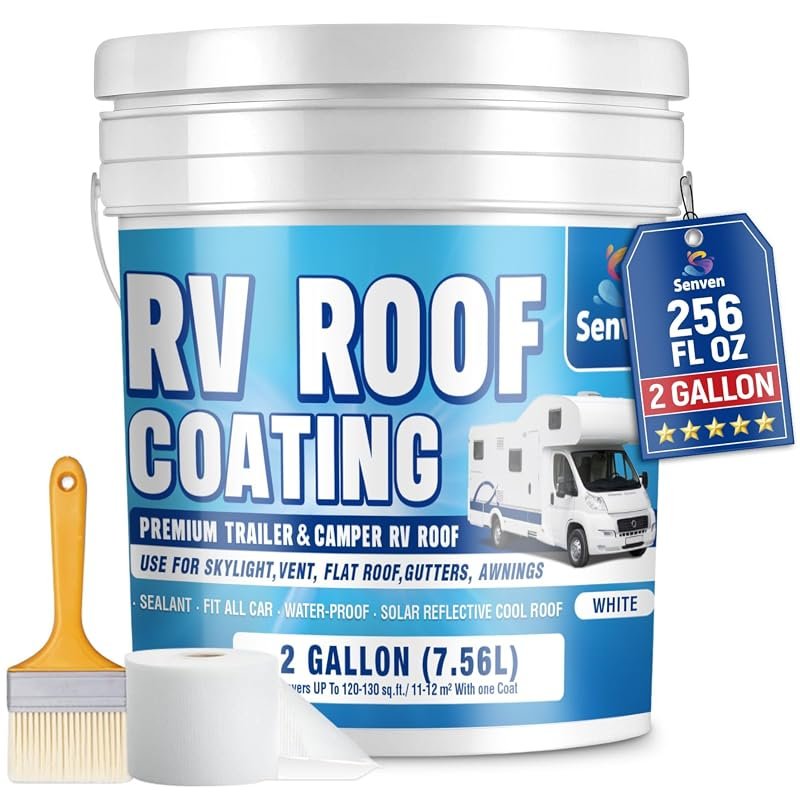 |
RV Roof Sealant 1 Gallon | The professional grade rv roof sealant coating, 1 gallon, waterproof, solar reflective, leak re… more | View on Amazon |
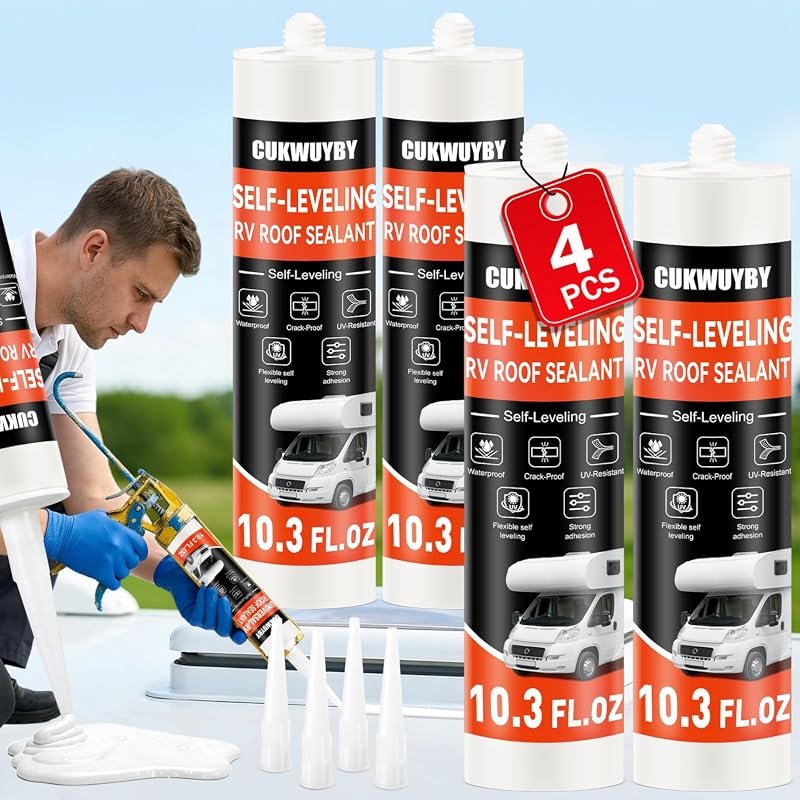 |
4 Pack RV Roof Sealant | The 4 pack self-leveling rv roof sealant, fast 30-second set time for quick camper and trailer… more | View on Amazon |
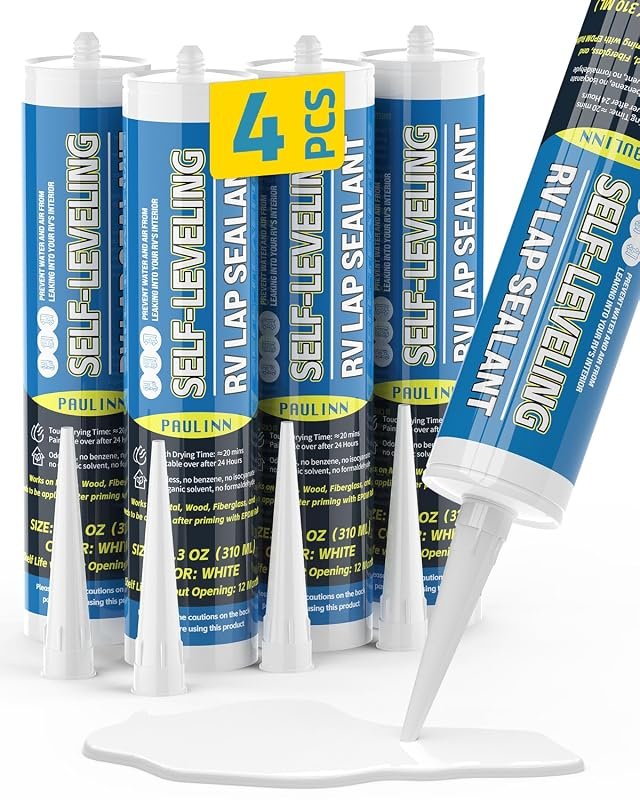 |
PAULINN Self-Leveling Lap Sealant | The paulinn self-leveling lap sealant, white rv roof caulking for epdm rubber roofs, waterproof… more | View on Amazon |
Our Top 5 Best Sealants For Camper Roof Reviews – Expert Tested & Recommended
1. Self-Leveling RV Roof Sealant Lap Caulking
This self-leveling RV roof sealant is an essential tool for any camper owner. It is specifically formulated to flow smoothly into cracks, ensuring a watertight barrier that stands up to harsh UV rays and extreme temperatures.
Key Features That Stand Out
- ✓ Self-leveling formula fills gaps perfectly
- ✓ Resistant to temperatures from -40°F to 200°F
- ✓ Fast-curing formula saves time during projects
- ✓ Bonds strongly to fiberglass, metal, and EPDM
Why We Recommend It
We love this sealant because it takes the guesswork out of the application process. It levels itself out, meaning you don’t need to be a professional to get a smooth, clean finish that stops leaks dead in their tracks.
Best For
This is perfect for DIY owners needing a reliable, heavy-duty solution for roof vents, skylights, and edge trim repairs.
Pros and Cons at a Glance
2. Waterproof RV Roof Sealant and Protective Coating
If you are looking for an all-in-one kit, this is it. It comes with a gallon of reflective coating, sealant tubes, and repair tape, making it a comprehensive RV roof maintenance kit for complete coverage.
Key Features That Stand Out
- ✓ Complete kit includes everything needed for a roof overhaul
- ✓ Solar-reflective white finish helps keep the interior cooler
- ✓ Flexible formula that won’t shrink over time
- ✓ Excellent adhesion to multiple RV materials
Why We Recommend It
We love that this product goes beyond simple sealing. It provides a reflective barrier that actually helps manage your camper’s temperature, saving you money on cooling costs while protecting your roof from UV damage.
Best For
This is ideal for anyone planning a major roof refurbishment or those who want a total system in one purchase.
Pros and Cons at a Glance
3. Professional Grade RV Roof Sealant Coating
If you need high performance without the premium price tag, this professional-grade sealant is an excellent choice. It creates a robust, leak-resistant membrane that works across many different roofing materials, including aluminum and EPDM.
Key Features That Stand Out
- ✓ Cost-effective 1-gallon size
- ✓ Elastomeric properties move with your RV’s chassis
- ✓ Reflects sun to prevent heat buildup
- ✓ Protects against water damage and leaks
Why We Recommend It
This product proves you don’t have to spend a fortune to get professional results. It’s easy to apply with a roller, and the durability it offers for the price is hard to beat.
Best For
Perfect for the budget-conscious camper owner looking to restore their roof without professional labor costs.
Pros and Cons at a Glance
4. 4 Pack Self-Leveling RV Roof Sealant
Need to handle multiple vent replacements or several roof seams? This 4-pack bundle offers incredible value and ensures you don’t run out halfway through a project. Its ultra-fast leveling is a huge plus for those who want to get back on the road quickly.
Key Features That Stand Out
- ✓ Fast 30-second set time for efficiency
- ✓ High elasticity withstands vibration during travel
- ✓ Convenient 4-pack bundle for larger projects
- ✓ Highly compatible with most roofing materials
Why We Recommend It
The speed at which this sealant levels and cures is impressive. It is a time-saver for anyone who has a lot of small maintenance tasks piling up, allowing for a quick, efficient fix that holds up to road travel.
Best For
Best for those with several repair points on their camper who want to ensure color and product consistency across all areas.
Pros and Cons at a Glance
5. PAULINN Self-Leveling Lap Sealant
PAULINN is a trusted name in the industry, and this 4-pack of lap sealant is built for the specific needs of EPDM rubber roofs. It’s highly fluid, which makes it perfect for creating a watertight seal on flat roof sections.
Key Features That Stand Out
- ✓ Exceptional fluidity for easy application
- ✓ UV and water-resistant for long-lasting protection
- ✓ Specifically designed for EPDM surfaces
- ✓ Sets in 30 minutes for faster project completion
Why We Recommend It
We recommend PAULINN because of how reliable it is under the stress of travel. You need a sealant that won’t crack when your camper flexes on the road, and this product does exactly that.
Best For
Ideal for EPDM roof owners who want a tried-and-true product that balances ease of use with long-term weather resistance.
Pros and Cons at a Glance
Complete Buying Guide for Best Sealants For Camper Roof
Essential Factors We Consider
When choosing the best sealant for your RV, you need to consider the material of your roof. EPDM rubber, fiberglass, and aluminum all have different bonding requirements. You should also look for a product that is UV-resistant and flexible, as your RV will twist and flex while traveling over uneven ground.
Budget Planning
Sealant costs can add up if you are doing a full roof restoration. Buying in bulk packs, like the 4-pack options reviewed here, often saves you significant money compared to buying individual tubes. Remember to factor in cleaning supplies, like rubbing alcohol or specialized roof cleaners, to ensure your application lasts as long as possible.
Final Thoughts
The best roof maintenance strategy is regular inspection. Check your roof seals at least twice a year. If you spot a crack, don’t wait for a leak; pick up one of these trusted sealants and handle it early to protect your investment.
Frequently Asked Questions
Q: Can I use silicone on my RV roof?
A: Generally, no. Most professionals avoid standard household silicone because it can be extremely difficult to remove later, and most other sealants will not stick to silicone residue. Always stick to products labeled for RV roofs.
Q: What is the difference between self-leveling and non-leveling?
A: Self-leveling sealant flows into gaps on its own and is perfect for flat, horizontal surfaces. Non-leveling sealant stays exactly where you put it and is designed for vertical surfaces or side-wall applications.
Q: How long does it take for RV roof sealant to dry?
A: This varies by product, but most sealants become tack-free in 2 to 4 hours and fully cure within 24 to 48 hours depending on humidity and temperature.