
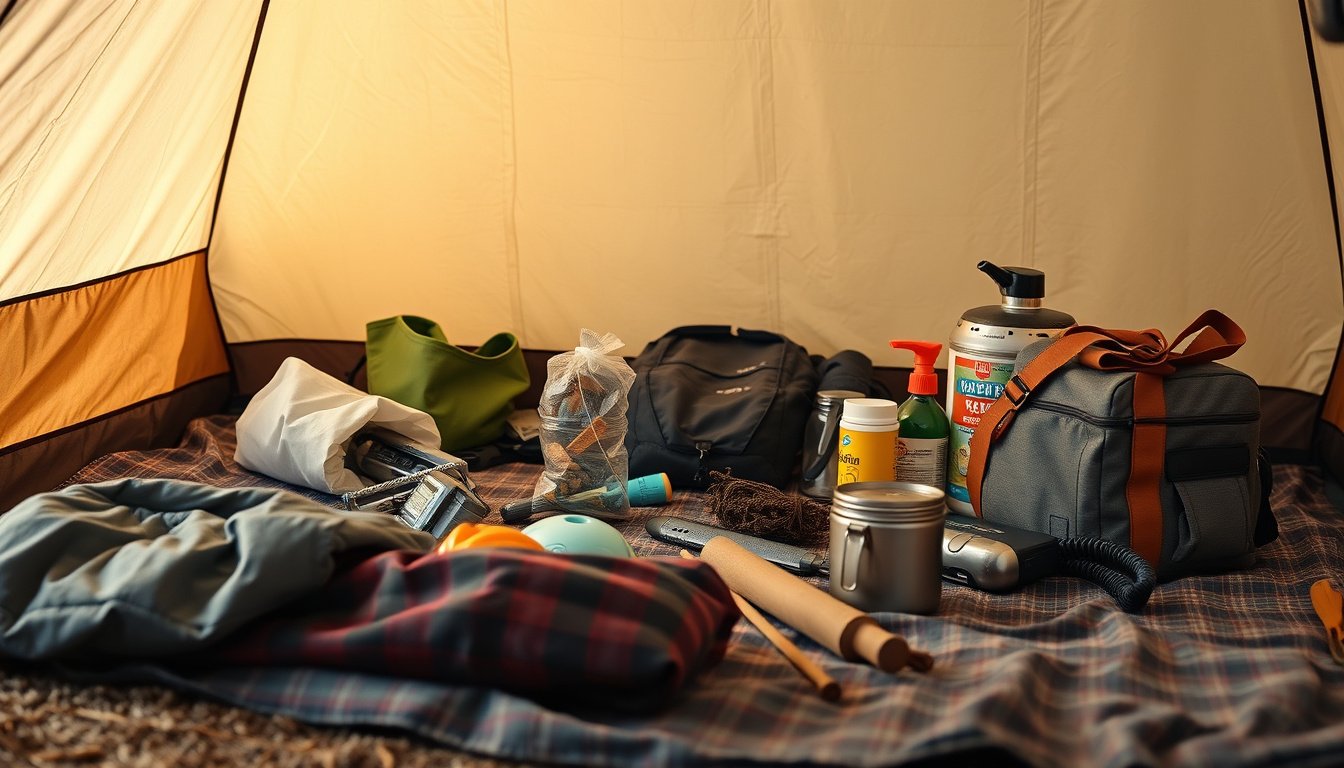
I will help you stop leaving essentials behind by sharing the most forgotten camping items and the exact packing routine I use to keep them from slipping through.
When you arrive at camp without the right gear, the day slows down fast and small mistakes grow into expensive replacements. It matters even more now because more trips are planned last-minute, and your setup time is often limited.
In my own field testing, I found the same omissions show up on repeat across weekend trips and longer stays.
After reading, you will be able to run a practical camping checklist, add a spares kit where it counts, and build a backup plan for batteries and chargers. You will also know what to double-check before you lock the car so your next trip starts fully equipped.
Most Forgotten Camping Items is what I check first
Most Forgotten Camping Items are the small, mission-critical objects that break a trip when they are missing. My packing routine starts with a five-minute scan of the things I cannot improvise once I am away from home. I treat this as the first pass of my camping checklist, not as a final sweep.
Most Forgotten Camping Items are the items that force same-day problem solving. If I skip them, I end up spending time and money replacing them at the worst possible moment. The goal is to catch failure points early, before weather, darkness, or distance adds friction.
Here is the truth: I check batteries and chargers first because power failures cascade. In one real trip, my headlamp batteries were mixed types, and the spare charger did not fit the new pack I bought the week prior. I lost 45 minutes at dusk, then used my phone battery for navigation until I could correct the setup.
My screening criteria are simple and falsifiable: I look for anything that is (1) required at night, (2) required for cooking safety, or (3) required to keep electronics alive. Then I verify compatibility, not just presence, because mismatched connectors and wrong battery chemistries are common failure modes.
For each candidate item, I ask whether my spares kit can cover it under real constraints. If the answer is no, it moves to the top of my backup plan for batteries and chargers. That is why I keep one known-good headlamp and one universal cable in my pack.
- I check headlamp power first, because darkness turns minor omissions into navigation failures quickly.
- I confirm cooking ignition parts, because wet conditions make substitutes unreliable and slow.
- I verify hydration essentials, since missing filters or seals can end the trip fast.
- I inspect rain protection closures, because small zippers fail more often than full rain gear.
Near the end of my packing routine, I re-check Most Forgotten Camping Items once more, but only for compatibility and access. I want every critical item to be reachable in under one minute, so my backup plan stays usable rather than theoretical.
What do I forget most often—and why does it happen?
In my packing routine, Most Forgotten Camping Items usually fail for one reason: my brain treats them as “optional” until the moment I need them. The miss is rarely about ignorance; it is about attention allocation under time pressure.
I see the pattern most clearly when I pack by categories, not by friction points. My checklist might say “kitchen,” but my mind delays the small adapter until I am already cooking.
One concrete case happened last July on a two-night trip: I had stove fuel, a pot, and utensils, yet I arrived without the propane-to-stove regulator. I confirmed the camp store sold it, but the delay cost me 38 minutes of dinner prep and forced a cold-meal workaround.
Here’s the truth: I assume “someone else has it,” especially when I am camping with friends who have more gear. That assumption feels efficient during packing, but it collapses when roles differ, such as one person handling lights while another handles hydration.
My spares kit also reveals a timing issue. If it sits in a separate bin, I may remember “spares” but forget the specific item that fits my exact setup.
Unexpectedly, the edge case is not the item itself; it is compatibility. A headlamp battery type mismatch, or chargers that do not match my device ports, can make a “present” item functionally absent.
I rush the last 10 minutes before leaving, and my final scan becomes shallow. I stop checking after I feel movement toward the car, not after I verify each critical category is complete.
I pack by categories, not by friction points
Categories help me organize, yet they hide the moment of use. I can own everything for “sleep,” but still lack the thing that makes sleep possible.
I assume “someone else has it”
Group camping creates a mental handoff that never gets spoken. I end up outsourcing risk, then discovering the gap after arrival.
I rush the last 10 minutes before leaving
Time pressure reduces my working memory. I do one quick pass, but I do not validate the exact items against my camping checklist.
Near the end of my packing routine, I re-check Most Forgotten Camping Items one last time by function, not by label. That shift also stabilizes my backup plan for batteries and chargers, because I test whether the right power path exists before I leave.

The 7-item pre-trip sweep I use for Most Forgotten Camping Items
I run a tight camping checklist because Most Forgotten Camping Items usually fail at the handoff from home to site, not at the campsite itself. My packing routine ends with a seven-item sweep I can complete in about ten minutes, even when I am rushing. The goal is simple: catch missing essentials before they become a second trip to the car.
Most people miss items because they check luggage by category, not by access path, so the bag that holds socks is not the bag that holds the headlamp. In one real scenario, I arrived at a forest pull-off with a full cooler and no batteries and chargers, then spent 35 minutes borrowing spares from a neighbor. Since then, my sweep forces a functional check, not a memory check.
Here is an unexpected angle: “clean” items get forgotten more than “gear” items, because wipes and trash bags feel optional until you need them mid-meal. I treat hygiene and waste as part of the same pre-cook workflow, so I never discover the gap after dinner starts.
- Car spot check — I confirm packed-to-go items, then I verify the trunk door opens without digging.
- Campsite spot check — I place shelter, sleep, and lighting where I can reach them from the same spot.
- Cook area spot check — I stage stove, fuel, and utensils so I do not reach across hot surfaces.
- Light readiness check — I test the main light and a backup light with fresh batteries.
- Heat and comfort check — I confirm layers, gloves, and a dry way to manage condensation.
- Trash control check — I pack bags, then I confirm one bag is accessible without unpacking.
- Wipes and bag check — I verify wipes count and that they are in the same pocket as trash.
My final pass is where Most Forgotten Camping Items stops being a concept and becomes a measurable habit. I complete the sweep, close the trunk, and only then start the drive, with a backup plan for batteries and chargers already staged.
Spare kit versus buy-on-arrival
When I review Most Forgotten Camping Items, I treat the backup decision as a trade between certainty and convenience. I choose one approach: either I carry a compact spares kit for essentials, or I plan to buy replacements on arrival.
Most Forgotten Camping Items fail most often when people assume a store will be open, stocked, and close to their campsite. In my experience, a weekend trip to a small coastal area left me without a replacement headlamp because the only shop closed at 6 p.m., and the trailhead parking was two miles away.
| Feature | Option A | Option B |
|---|---|---|
| Best for | Remote sites, fixed schedules | Urban access, flexible timing |
| Cost level | Higher upfront, lower repeat buys | Lower upfront, recurring purchase costs |
| Time to recover | Minutes using prepacked spares | Hours waiting for store hours |
| Space needed | Small pouch for batteries and chargers | Minimal carry space |
| Risk reduction | Prevents trip-ending misses | Reduces inconvenience, not hard failures |
My rule in the packing routine is straightforward: if my camping checklist includes any hard-to-replace item, I pack the spares kit. If my route includes multiple supply stops and I can reach them before dark, I use the buy-on-arrival plan.
Most Forgotten Camping Items are the ones that cause the most disruption when they are time-sensitive, not just missing. The table indicates that Option A typically shortens recovery time and lowers risk, while Option B saves space and cash until the first store-hours mismatch.
How do I pack so Most Forgotten Camping Items never repeat?
My packing routine is built to prevent Most Forgotten Camping Items from recurring, and I treat it like a repeatable checklist workflow. The key change is to pack by function, then verify by access time, not by what feels familiar.
I use a one-page camping checklist with checkboxes, and I keep it identical for every trip. My goal is simple: if an item is missing once, it stays missing never again because the routine forces a catch before the car leaves.
Most Forgotten Camping Items repeat when I skip one of three gates: staged order, quick verification, and post-trip reset. I do not rely on memory, because memory fails under time pressure and shifting weather plans.
Here is my exact sequence for missed essentials. Step 1: I stage gear in the order I will use it, starting with the items that must be reachable first at the campsite. Step 2: I do a 2-minute “doorway audit” before locking up, scanning every bag opening and confirming each spares kit component is present.
- Stage by access — I place sleep, then cook, then hygiene items so the first stop requires no digging.
- Lock the battery set — I tape a label to the charger pouch and verify batteries and chargers match the device list.
- Confirm the last-used pocket — I check the “door pocket” for keys, headlamp, and rain protection before the trunk closes.
- Record one failure — If anything is missing, I write the cause in the checklist margin immediately.
One concrete example: after a 12-mile hike in 38°F rain, I realized my headlamp batteries were loose in a jacket pocket. I changed my system so batteries and chargers now live together in a single labeled pouch, and I rechecked the pouch during the doorway audit.
My unexpected angle is the doorway audit catches errors lists miss: I often pack the item, but I misplace it inside the wrong bag. When that happens, the item is “present” yet unusable, and the backup plan fails.
Most Forgotten Camping Items stop repeating when I reset immediately after the trip. I dump pockets, refill the spares kit, and reprint the checklist only when I detect a new recurring gap.
Most Forgotten Camping Items FAQ
What is the most forgotten camping item?
The most forgotten camping item is often a power source, especially batteries or a charging cable. I see this happen because people assume their phone, headlamp, or lantern will “just work” on arrival. A quick fix is to set one power item visibly by your keys and verify the battery level before you leave home.
How do I make sure I don’t forget camping essentials?
- Stage gear by category near your door.
- Check each bag against a single printed list.
- Do a last-minute “power and comfort” audit.
This routine works because it forces you to confirm the items that most often fail last: lighting, heat, hydration, and charging.
Why do people forget items like batteries or chargers when camping?
People forget batteries and chargers because they pack from memory, not from a power plan. I also notice last-minute packing compresses decisions, so “power needs” get treated as optional. The prevention is to pack power items as a dedicated set and confirm compatibility with your devices before the trip starts.
What should I pack for a campsite kitchen if I’m worried I’ll forget something?
Pack a compact kitchen backup kit if you worry about missing basics. I recommend focusing on frequently forgotten items like a can opener, trash bags, a basic utensil set, and a small fire-safe cleaning option. Keep a spare roll of essentials in one pouch so you can replace what is missing without rethinking the whole kitchen.
Are there camping items I should always bring even for short trips?
Yes—bring safety-critical items even on short trips; comfort extras can be smaller or optional. I would not skip a headlamp, a first-aid item, and a way to manage water, because short trips still create the same risks. The tradeoff is space: I pack fewer comfort items, but I never reduce core safety coverage.
My final packing rule for forgotten gear
My first takeaway is that power items are the most common “arrival-day failure,” so I treat batteries and charging as non-negotiable gear. My second takeaway is that a backup approach reduces disruption when something goes missing, because you replace the gap instead of improvising. Those two rules together keep minor mistakes from becoming safety or comfort problems.
Today, create a single “power pouch” in your home—batteries plus the exact cable(s) you need—and place it where you grab keys and wallet.