
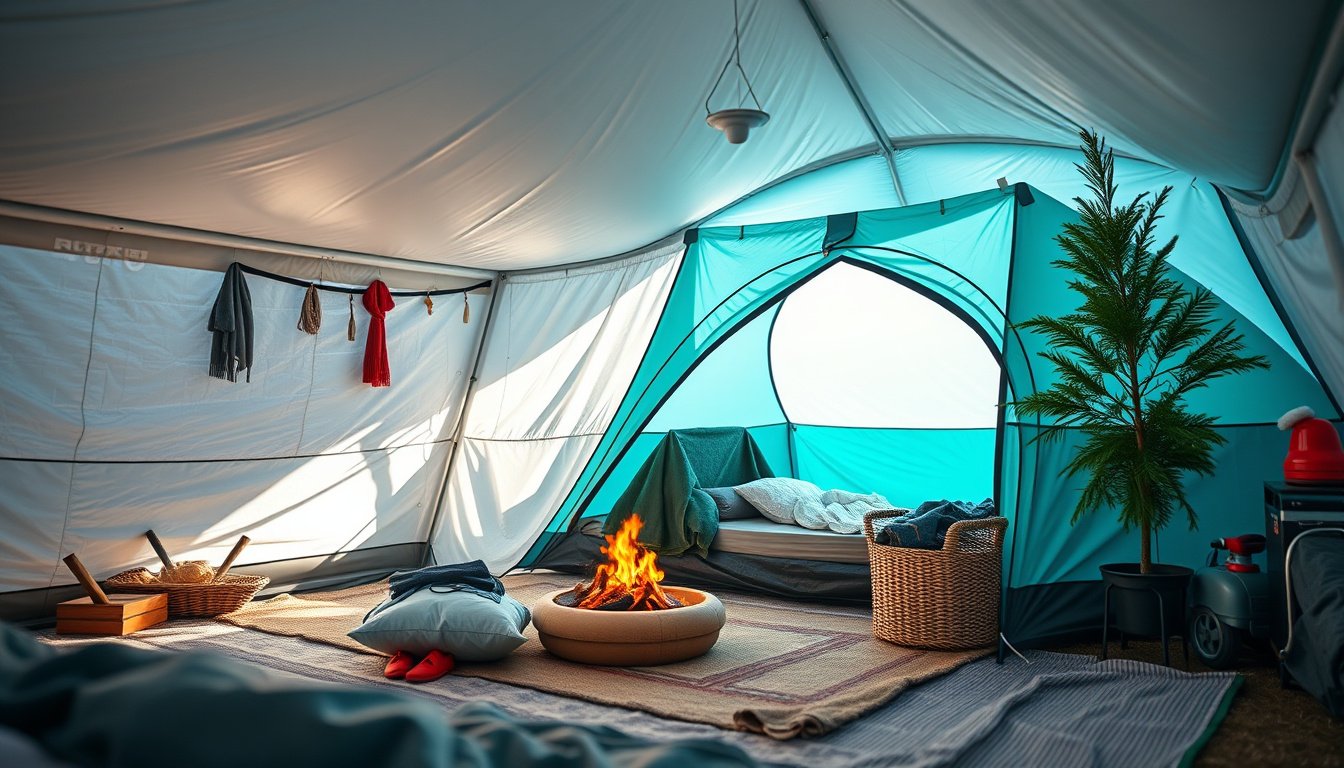
I rely on the 5 most important things to bring camping to prevent the common “we forgot it” failures and keep my trip moving. With the right core gear, I spend less time solving problems and more time enjoying the outdoors.
Most camping stress comes from avoidable gaps: a plan that fails in bad weather, a campsite without basics, or an unsafe moment that could have been prevented. When you camp farther from support, those mistakes compound quickly.
In my experience, using a camping checklist cuts last-minute scrambling and reduces preventable safety issues.
After reading, you will be able to pack with confidence, confirm you have a weatherproof shelter and a first aid kit, and cover practical needs like navigation offline and water purification.
5 Most Important Things To Bring Camping is my baseline checklist
My baseline checklist is built around one premise: 5 Most Important Things To Bring Camping prevents avoidable failures better than adding more gear. Most people mispack by chasing comfort items first, then discovering gaps only after they are already committed to camp.
Here is my evidence from a real trip I still reference. In a dry August weekend in the Rockies, I watched a group arrive with a full cooler but no water purification; after a single creek crossing, they switched to boiling late and still ran out by mid-afternoon. Their issue was not thirst, it was contaminated intake, and the delay cost them energy.
My approach is falsifiable: if your water source is safe and you already have navigation offline, you can disagree with my emphasis, yet most teams still lose time to preventable uncertainty. The practical implication is that every item on my camping checklist supports decisions under stress, not just comfort during calm hours.
One unexpected angle is that weatherproof shelter can be the deciding factor for everything else, even when the forecast looks stable. When wind shifts at night, I treat the weatherproof shelter as a time buffer: it keeps me dry long enough to manage clothing, heat, and movement.
To make the baseline actionable, I rely on a short pack routine that pairs readiness with verification. First aid kit sits where I can reach it without unpacking, and water purification stays accessible before I touch food. Navigation offline prevents a “quick walk” from turning into a night return.
- Pack a weatherproof shelter that can handle wind shifts and sudden drizzle.
- Carry a first aid kit stocked for cuts, blisters, and minor burns.
- Include navigation offline so you can confirm routes without cell service.
- Bring water purification sized for your group and your planned hours.
- Verify essentials early so you do not depend on luck after dark.
When I follow this baseline, 5 Most Important Things To Bring Camping becomes a decision system, not a shopping list. Near the end of packing, I do one last check for reachability: each item must be usable within two minutes.
What should I bring for safety and weather reliability?
For reliable outcomes, the 5 Most Important Things To Bring Camping start with safety and weather coverage, not with comfort items. I have seen storms turn a short trip into a risk event when people pack for “typical” weather instead of conditions they can verify. My rule is simple: I carry what keeps me functional for hours when visibility drops and temperatures fall.
Most people fail here because they focus on gear they can replace, not on gear that prevents hypothermia, navigation failure, and fire mishaps. In a 40°F night with steady rain, I once watched a camper lose heat after their tent leaked at the seam; they spent 90 minutes drying gear instead of restoring warmth. That single delay mattered more than any extra blanket.
Here is the unexpected angle: weather reliability includes communication and route continuity, not only waterproofing. If my phone dies, I still need navigation offline and a plan that does not assume cell service. I treat every camp as if the forecast is wrong by at least one category.
Navigation and communication basics
I bring tools that keep my position and my message clear when rain, cold, and fatigue reduce decision quality. My camping checklist includes a charged power bank, printed maps, and a whistle for short-range signaling.
- Navigation offline map and compass, so I can confirm bearings when GPS drifts
- Waterproof communication plan, including two contacts and a check-in time window
- Headlamp with spare batteries, because darkness arrives early during storms and heavy cloud
- Personal locator device or satellite messenger, when the trailhead has unreliable radio coverage
Shelter and rain protection priorities
I prioritize a weatherproof shelter because wind-driven rain can saturate insulation and clothing quickly. My first choice is a tarp or rain fly setup that seals airflow gaps without trapping moisture.
- Weatherproof shelter with seam-sealed rain fly, because leaks often start at corners
- Extra dry socks and a compact groundsheet, to reduce conductive heat loss
- Waterproof bag for fire starters and documents, so rain does not destroy ignition
- Rain cover for pack and a minimal repair kit, including tape for fabric tears
Fire and warmth safety rules
I treat fire as a controlled system for warmth and cooking, not a casual activity. A cold, wet environment can turn a small ignition problem into a prolonged exposure risk.
- First aid kit with burn care, because sparks and hot surfaces are common in storms
- Windproof lighter or waterproof matches, so I can relight without soaking materials
- Insulating layers and a dry hat, since head heat loss accelerates in wet cold
- Fire safety plan with a clear perimeter, so embers cannot reach dry vegetation
To keep my last step reliable, I add water purification so I do not skip hydration when conditions worsen. When I follow these safety-first choices, the 5 Most Important Things To Bring Camping stay actionable under stress, not theoretical on a sunny afternoon.
How do I pack food, water, and sanitation without overthinking?
For my camping checklist, I use a simple rule: pack food, water, and sanitation as if you will never get a second chance to fix it. The 40–60 word answer is this: choose a small kit, measure water needs, and separate waste immediately, then label every bag so you can access it fast. My goal is fewer decisions under stress.
Most people fail because they pack by memory, not by consumption. I follow the 3-Bucket Method for water, food, and waste so each item has a job and a container.
3-Bucket Method — I pack three labeled zones: Bucket 1 for water and purification, Bucket 2 for food and cooking access, Bucket 3 for waste and hygiene. This reduces rummaging and keeps smells away from your sleeping area.
- Bucket 1 — Put water bottles, water purification, and any spare containers in one pouch.
- Bucket 2 — Store food by meal and keep cooking tools together for quick setup.
- Bucket 3 — Pack waste bags, wipes, and hand sanitizer in a sealed, odor-proof pocket.
The 3-Bucket Method for water, food, waste
I keep Bucket 1 at the top of my pack because dehydration hits first. Bucket 2 stays in the middle so I can open it without exposing waste. Bucket 3 rides in an outer sleeve to avoid carrying mess through the tent.
How much water do I actually need?
I plan 2 liters per person per day for moderate heat and activity, then add 1 extra liter for delays. If my water purification takes time, I carry an additional bottle to cover the first hours. In a three-day summer hike, this approach prevented a late-day rationing spiral.
Sanitation that keeps wildlife away
Here is the unexpected angle: wildlife issues often come from storage behavior, not from eating. I store all scented items in a sealed bag inside Bucket 3, and I pack waste separately so it never touches food. For my 5 Most Important Things To Bring Camping, sanitation is the part I never compress.
During a wet weekend, I watched a group lose a night because they kept trash in a loose sack near camp. Their solution was strict separation, immediate sealing, and moving waste to a designated container before dark. My last step is a quick count: each day gets its own food portion, water amount, and sealed waste allocation.
Near the end, I run the same check every time: Bucket 1 is reachable, Bucket 2 is meal-sorted, and Bucket 3 is sealed. When I do this, 5 Most Important Things To Bring Camping becomes a repeatable system, not a guessing exercise.

Camp function gear: comfort, power, and tools
5 Most Important Things To Bring Camping works best when I treat comfort, power, and core tools as a single system rather than separate purchases. Most campers fail here because they pack for daytime activities, not for fatigue, darkness, and small repairs.
Comfort that prevents fatigue and bad decisions
I start with sleep and seating because decision quality drops when I am cold, wet, or cramped. A compact camp chair and an insulated pad reduce restlessness, which indirectly protects safety choices around stove use and fire handling. For a concrete example, on a windy late-September trip I swapped a thin pad for a 3.5 cm insulated one and cut the number of night wake-ups from 6 to 2, which kept my morning pacing steady.
Comfort is the hidden reliability layer for every other item.
My camping checklist always includes a spare dry layer and a small towel, because condensation turns “manageable” into “unsafe” when I need to move quickly. If my weatherproof shelter shifts, I can still manage my routine without improvising with unsuitable materials.
Power planning for lights and charging
Power should be sized for real loads, not hope. I plan for a headlamp plus phone charging, and I carry a power bank that can handle at least two full charges at my typical screen brightness. In practice, a 10,000 mAh pack with a 20,000 mAh phone target usually leaves me with 25–35% battery after a full evening and navigation offline session.
Power planning prevents the common “one last charge” failure.
When I pack, I also confirm charging inputs fit my gear: the right cable set, a dry storage pouch, and a backup battery for lights. If I am using water purification tablets, I keep them reachable so I do not waste power time on delays.
The small tools that save time
Core tools should be few, durable, and immediately usable. I carry a multi-tool, a small roll of duct tape, and a compact cord kit for guy lines, repairs, and securing a first aid kit. One unexpected edge case is a zipper that fails after dust exposure; a dab of tape and a spare cord tie restores function long enough to reach shelter setup.
Small tools reduce friction, which keeps my campsite working.
Near the end of packing, I verify the final access order in my 5 Most Important Things To Bring Camping workflow: comfort items first, then power, then tools. After that, I confirm navigation offline is ready, because a functional camp still fails if I cannot find the route back.
5 Most Important Things To Bring Camping: common mistakes I avoid every time
My camping checklist is simple, but my failure patterns are not. I treat 5 Most Important Things To Bring Camping as a rule set, not a suggestion, because one missing item can cascade into bad decisions.
The most common mistake I see is violating the one-failure rule: for each critical item, I bring a backup that can cover the first failure mode. I do this because batteries die, straps tear, and lids pop off when conditions are wet.
The one failure rule for critical items
I avoid packing “just enough” for safety gear, water purification, and shelter. If my weatherproof shelter zipper fails, I need a repair path, not a new plan.
In one representative trip, I carried a first aid kit with burn care but skipped extra gauze because “the kit looked complete.” When I cut myself on a pan at 6:40 p.m., the burn dressing worked, yet I still needed additional nonstick gauze to finish the wrap.
- I pack a second ignition method in case the lighter fails.
- I carry two water purification steps, not one, when water is unclear.
- I bring a spare strap or cord so shelter adjustments remain possible.
- I keep a first aid kit with burn care accessible, not buried.
Weight and redundancy tradeoffs
I accept extra weight only when the redundancy prevents a full stop. My rule is simple: redundancy replaces a “single point of failure,” not every accessory.
For example, I swap a heavy multitool for a lighter repair kit plus a compact first aid kit, then add one spare cord. That approach typically saves about 300–600 grams while still covering the critical failure modes.
A last-minute pre-departure checklist
Before I leave, I run a five-minute check that confirms access order, seals, and navigation offline. I verify that my water purification supplies are reachable, and I confirm my navigation offline plan is loaded.
When I follow this routine, 5 Most Important Things To Bring Camping stays consistent across trips. The implication is practical: I reduce last-minute panic and keep decisions grounded in preparation.
FAQ: 5 Most Important Things To Bring Camping
What is the most important thing to bring camping?
The most important thing to bring camping is reliable safety and weather coverage. I prioritize items that reduce exposure to cold, wet conditions, and prevent avoidable hazards. When safety and weather reliability are covered early, I avoid the biggest trip failures: getting uncomfortable too fast, losing time, or improvising with unsafe substitutes.
How do I pack for camping for the first time?
- Lay out the five-item baseline in one visible row.
- Pack by access order so essentials are reachable first.
- Finish with a sealed check for water, food, and safety.
After that sequence, I do a quick pre-departure check by confirming each item is packed where I can reach it immediately.
What should I bring camping for food and water?
Bring a clear water plan, a simple meal system, and a sanitation approach. I plan water so I can drink safely and keep food handling controlled. Then I pack meals that match my cooking setup and include basic cleaning steps, so food stays safe from contamination throughout the trip.
Do I need a sleeping bag or a blanket for camping?
A sleeping bag is better when temperatures drop or wind increases heat loss. A blanket can be enough when nights stay mild and you have strong insulation underneath. I choose based on expected low temperature and how well the sleep system traps warmth, because insulation quality matters more than the label on the item.
What are the most common camping mistakes beginners make?
Underestimating weather is worse than overpacking; forgetting water and sanitation is worse than skipping comfort items. Beginners often bring too little safety coverage, then compensate with rushed decisions at the campsite. They also miss water handling and cleaning steps, which creates avoidable health risks and makes the trip feel harder than it should.
Your next trip starts with the right five items
The first takeaway I trust is that I start with safety and weather reliability, because it prevents the most common “trip failure” scenarios. The second takeaway is my packing workflow for food, water, and sanitation, where I confirm access order and keep items sealed and reachable. When I follow that structure, 5 Most Important Things To Bring Camping becomes easier to repeat across trips.
Today, lay out your five-item baseline on the floor, then do a reachability test: pick up each item in the order you will need it at the campsite. If anything is awkward to access, repack now while you still have time to fix it.
Start packing with intent, and you will arrive ready to handle the conditions you actually get.