
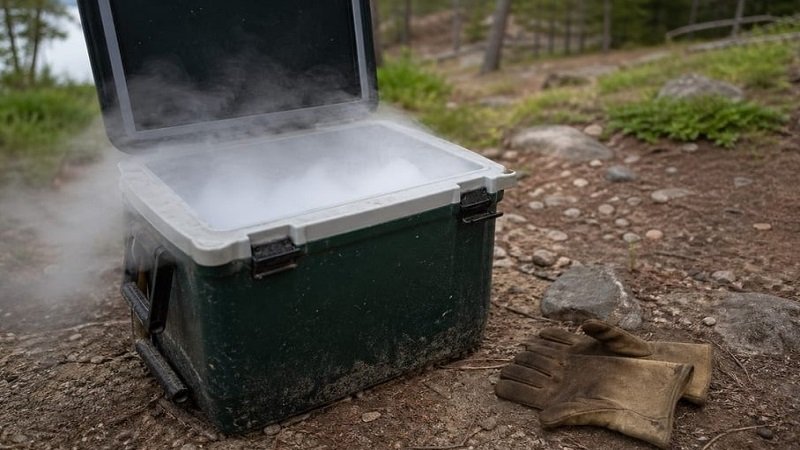
Dry ice is a powerful tool for camping, offering superior cooling power compared to regular ice, but it requires careful handling. While it excels at keeping food frozen for days, you must follow strict safety protocols to avoid frostbite and carbon dioxide buildup in your tent or vehicle.
When you are planning a long weekend in the wilderness, the biggest challenge is often keeping your food fresh. We have all dealt with the dreaded “cooler soup” that soggy, lukewarm mess of melted ice and floating burger patties. By the time you reach day three of your trip, your lunch is usually ruined. This is why many campers in 2026 are turning to a more advanced solution: dry ice.
So, is dry ice good for camping? The short answer is yes, but with some major caveats. It is not exactly like grabbing a bag of cubes from the gas station. Dry ice is frozen carbon dioxide, and it sits at a staggering -109.3 degrees Fahrenheit.
It does not melt into a liquid; instead, it turns directly into gas. This process, known as sublimation, makes it incredibly efficient at keeping things cold, but it also introduces unique safety concerns that every camper should understand before heading out.
Key Takeaways
- Extreme Cooling: Dry ice is much colder than regular ice, making it perfect for long trips where you need to keep items frozen.
- Safety First: Never touch dry ice with bare skin and always ensure your cooler or vehicle has proper ventilation to release CO2 gas.
- Planning is Essential: You need a high-quality, rotomolded cooler to maximize the lifespan of dry ice.
- Food Compatibility: Dry ice can “burn” food if it comes in direct contact, so always wrap your items in a towel or thick paper.
- Weight Benefits: Dry ice sublimates into gas rather than melting into water, which keeps your cooler contents dry and lighter over time.
- Legal and Park Rules: Some campsites have specific regulations regarding the disposal of dry ice, so always check local guidelines before you go.
Understanding How Dry Ice Works for Campers
To decide if dry ice is the right choice for your gear, you need to understand the science behind it. Unlike regular water ice, which melts and creates moisture, dry ice vanishes. This keeps your cooler interior dry, which is fantastic for items that don’t do well in water, like bread or cardboard-packaged goods. However, because it is so cold, it can act almost like an oven in reverse, freezing anything that touches it solid.
The Sublimation Factor
Because dry ice turns into CO2 gas, your cooler needs to be ventilated. If you seal your cooler airtight, the gas will build up pressure. In extreme cases, this can cause a plastic cooler to warp or even crack.
Most modern, high-end camping coolers are designed with high-quality seals. If you use dry ice, you might need to leave the seal slightly cracked or ensure the cooler is in a well-ventilated area, like the back of a truck bed, rather than inside a closed car cabin.
Comparing Regular Ice vs. Dry Ice
Regular ice is cheap and easy to find, but it is heavy and creates a mess. Dry ice is more expensive and harder to source, but it offers a much longer cooling duration. If you are going on a two-day trip to a local state park, regular ice is usually fine.
If you are heading out for a week-long excursion into the backcountry, dry ice is a game-changer. It allows you to pack frozen steaks for your fifth night, which is a luxury that regular ice simply cannot provide.
Essential Safety Protocols for Dry Ice
Safety is the number one priority when dealing with dry ice. Because it is so much colder than freezing, direct skin contact can cause instant frostbite. You should never handle dry ice with your bare hands. Always use thick, insulated work gloves or heavy-duty tongs to move it around your cooler.

Visual guide about Is Dry Ice Good for Camping
Image source: outforia.com
Ventilation is Mandatory
The carbon dioxide released by dry ice is invisible and odorless. In small, enclosed spaces, it can displace oxygen, which is very dangerous. Never sleep with a cooler containing dry ice inside your tent. If you are transporting it in your vehicle, ensure your windows are cracked or your truck topper has vents. It is a simple habit, but it is a life-saving one.
Handling with Children and Pets
Dry ice looks like normal ice, and that makes it attractive to curious children. It is vital that you keep your dry ice supply away from children and pets. Do not put it in drinks for “smoke effects” unless you are 100% certain the ice is completely sublimated before consumption. Ingesting dry ice is a medical emergency that can cause severe internal damage.
Packing Your Cooler the Professional Way
Using dry ice is an art form. If you throw a block into your cooler with a bunch of loose hot dogs, you will end up with frozen, rock-hard sausages that take hours to thaw. The goal is to create a “freezer zone” and a “fridge zone” within your cooler.
The Layering Technique
Start by placing a thick towel or a piece of cardboard at the bottom of your cooler. Place your dry ice on top of this barrier. Then, add another layer of insulation, such as more cardboard or a thick piece of foam. Place your frozen items, like meat or pre-made frozen meals, directly on top of this layer. The food will stay frozen, while the items on top (or in a separate basket) stay perfectly chilled.
Maximizing Longevity
To make your dry ice last as long as possible, avoid opening the cooler too often. Every time you lift the lid, cold air escapes and warm air rushes in, causing the dry ice to sublimate faster. Keep a list of what is in your cooler taped to the outside so you know exactly where to reach before you open the lid. The less time the lid is open, the longer your food stays cold.
Selecting the Right Equipment
Not all coolers are created equal. If you are wondering if dry ice is good for camping, the answer depends heavily on your hardware. Cheap, thin-walled plastic coolers are not designed to handle the extreme temperatures of dry ice. The cold can make the plastic brittle and prone to shattering.
The Rise of Rotomolded Coolers
In 2026, rotomolded coolers are the gold standard for outdoor enthusiasts. These coolers are built with thick, insulated walls and high-quality rubber gaskets. They are designed to withstand the intensity of dry ice without failing. If you are going to invest in dry ice, invest in a decent cooler first. It will pay for itself in the food you save from spoiling.
Avoiding Cooler Damage
Some manufacturers explicitly state whether their coolers are dry-ice compatible. Before you drop a ten-pound block of dry ice into your gear, check the manual. If you have an older or cheaper cooler, you can line the inside with extra foam board to create a buffer. This protects the cooler walls and slows down the sublimation process.
Best Camping Scenarios for Dry Ice
Dry ice is not needed for every trip. If you are car camping near a store, you can just buy fresh ice daily. However, for certain trips, it is the best tool in your kit.
Long-Distance Road Trips
If you are driving across the country to a national park, you need your supplies to last for several days. Dry ice allows you to pack meals for the entire trip, reducing your reliance on expensive and often unhealthy fast-food stops along the way. This is perfect for remote destinations where grocery stores are few and far between.
Off-Grid Camping and Base Camps
For those setting up a base camp for a week of hiking or fishing, dry ice is a lifesaver. It keeps your base camp supplied with high-protein frozen meals, keeping your energy levels high for your daily activities. Just remember to pack enough dry ice to last the duration of your stay, as you won’t be able to restock easily.
Conclusion: Is It Worth the Effort?
Is dry ice good for camping? It absolutely is, provided you respect the science and prioritize safety. It turns your camping cooler into a portable freezer, allowing for a level of food quality that was once impossible in the wild. If you are planning a trip where you will be away from civilization for more than 48 hours, the benefits of dry ice far outweigh the extra planning required.
Just remember: use gloves, keep your cooler ventilated, and never let it touch your skin or reach your food directly. With the right cooler and a bit of caution, you can enjoy gourmet meals under the stars without a hint of spoiled ingredients. Stay safe, stay cold, and enjoy your time in the great outdoors!
Frequently Asked Questions
Can I put dry ice directly on my food?
No, you should never place dry ice directly on food as it will likely freeze it solid or cause freezer burn. Always use a barrier like a towel, cardboard, or a thick layer of insulation to separate the dry ice from your perishables.
How long does dry ice usually last in a cooler?
In a high-quality rotomolded cooler, a 10-pound block of dry ice can last between 3 to 5 days, depending on how often you open the lid. In cheaper coolers, it may sublimate much faster due to poor insulation.
Is it safe to put dry ice in a plastic water bottle?
Absolutely not; this is extremely dangerous. As the dry ice turns into gas, it will cause the bottle to build up pressure and eventually explode, which can cause severe injuries.
Can I use dry ice in my tent while I sleep?
Never keep a cooler with dry ice inside your tent or any other small, enclosed sleeping space. The CO2 gas released can cause oxygen deprivation, which is a major safety hazard.
Where is the best place to buy dry ice?
You can often find dry ice at large grocery store chains, local ice distributors, or specialized welding supply shops. It is best to call ahead and check local availability before driving to pick it up.
What should I do with leftover dry ice after my trip?
If you have leftover dry ice, the best thing to do is let it sublimate in a well-ventilated outdoor area away from pets and children. Never dispose of it in a sink, toilet, or confined trash bin, as the gas expansion can damage pipes or receptacles.