
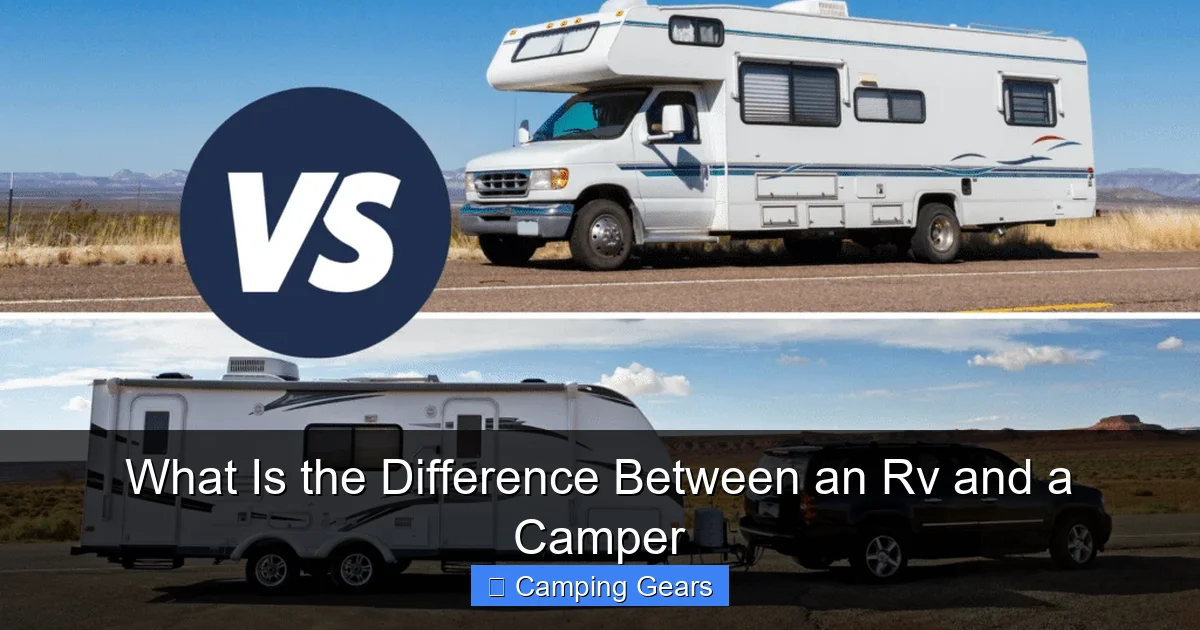
The core difference between an RV and a camper lies in mobility and self-containment. While an RV is a motorized vehicle designed to be driven, a camper is typically a towable unit that requires a separate vehicle to move. Understanding these distinctions will ensure you pick the right gear for your 2026 travel style.
Planning your next great escape for 2026? If you have been browsing through camping gear, you have likely run into the terms “RV” and “camper.” While people often use these words like they mean the same thing, they actually describe different types of mobile homes on wheels. Understanding the difference between an RV and a camper is the first step toward having a stress-free trip.
At its simplest, the difference comes down to how you move. If the house has an engine and you sit behind a steering wheel to drive it, that is an RV. If the house is a box on wheels that you pull behind your truck or SUV, that is a camper. Let us dive into the details so you can decide which one fits your travel style best.
Key Takeaways
- Motorization: RVs are motorized vehicles you drive, while campers are trailers you tow behind a truck or SUV.
- Ease of Travel: Driving an RV allows for easier access to the living space while on the road, whereas campers require stopping to access amenities.
- Flexibility: Campers offer the freedom to unhitch at a campsite, allowing you to use your primary vehicle for local exploration.
- Maintenance Costs: RVs have complex engine maintenance needs, whereas campers generally have lower upkeep costs since they lack a drivetrain.
- Size and Storage: Both categories range from compact to massive, but campers are often easier to store in standard garages or driveways.
- Budgeting: Entry-level campers are usually more budget-friendly than motorized RVs, making them great for beginners in 2026.
Understanding the Basics of Motorized RVs
A Recreational Vehicle, or RV, is a self-contained unit. It is a motorized home. When you own an RV, you are essentially driving a large van or truck that has been outfitted with beds, a kitchen, and a bathroom. In 2026, the technology inside these rigs has improved significantly, making them feel more like luxury hotels than old-school buses.
The Benefits of Driving Your Home
The biggest perk of an RV is convenience. When you are on a long road trip, having everything with you is a game-changer. Do you need a snack while your partner is driving? You can walk back to the fridge. Do the kids need to use the restroom? You can pull over, and they can use the onboard facilities without ever stepping outside into the rain or snow.
Common Types of RVs
There are three main classes of motorized RVs. Class A models are the big, bus-like giants. They offer the most space. Class B models are essentially “camper vans” that are easy to park and drive. Class C models fall in the middle, featuring a distinct over-the-cab sleeping area. Choosing between these depends on how many people are traveling and how comfortable you are driving a large vehicle.
Exploring the World of Towable Campers
A camper is a towable unit. It does not have an engine of its own. To move it from point A to point B, you need a towing vehicle, like a pickup truck or a large SUV. Many people love campers because they often provide more interior space for the price compared to motorized RVs. Since there is no engine to maintain, campers are also easier to keep in good shape over the long haul.
Visual guide about What Is the Difference Between an Rv and a Camper
Image source: carinsurent.com
The Freedom of the Unhitch
The best part about owning a camper is the ability to unhitch. Once you arrive at your campsite and level your unit, you can disconnect your truck. Now, you have a vehicle to drive into town for groceries or to visit national parks without having to pack up your entire camp. This is a huge advantage over large motorized RVs that require you to break camp every time you need to leave the site.
Popular Styles of Campers
Travel trailers are the most common type of camper. They attach to a standard hitch on the back of your vehicle. Fifth wheels are another popular option; they attach to a special hitch in the bed of a pickup truck. These are incredibly stable on the road. Then, you have pop-up campers, which are lightweight and can be collapsed for easy storage in a garage.
Maintenance and Long-Term Ownership
When thinking about the difference between an RV and a camper, you must consider the maintenance schedule. A motorized RV is a vehicle first and a home second. This means you have to change the oil, check the transmission, and monitor the tires of a heavy engine. If the engine breaks down, your home is effectively grounded until the mechanic finishes the job.
Lower Maintenance for Campers
With a camper, you only have a drivetrain if you count your tow vehicle. The camper itself is much simpler. You mostly deal with roof seals, plumbing, and electrical systems. If your tow vehicle needs a tune-up, you can take it to any local shop, while your camper stays safely tucked away at your home. This distinction makes campers an appealing choice for people who prefer lower mechanical stress.
Budget Considerations for 2026
In 2026, the price of gasoline and electric charging options influences travel choices. Motorized RVs, especially larger ones, can be quite thirsty at the pump. While campers still add significant weight to your truck, you are only dealing with the fuel efficiency of your tow vehicle. By choosing the right tow rig, you can often save money on fuel compared to piloting a large, aerodynamic-challenged Class A RV.
Size, Storage, and Parking Logistics
One of the biggest struggles for new travelers is where to keep their rig. An RV is a permanent fixture. Unless you have a massive driveway or a specialized storage unit, you will likely need to pay a monthly fee for off-site storage. Because of their size and complexity, they aren’t meant to be hidden away in a standard residential garage.
The Compact Camper Advantage
Many smaller campers, like teardrop trailers or folding pop-ups, are designed for the average homeowner. If you have a two-car garage, you might be able to store your camper right at home. This saves you money on storage fees and gives you peace of mind knowing your gear is safe from the elements and protected from theft.
Navigating the Road
Driving a motorized RV requires a bit of practice. Turning, braking, and parking are all different than driving a car. Campers, especially when you are just starting, can feel intimidating too. However, many people find that a truck pulling a trailer is easier to manage in tight spots than a long, rigid motorized bus. Always check your turning radius and remember that you have more length behind you!
How to Choose Your Perfect Adventure Rig?
Choosing between an RV and a camper comes down to your personal travel style. Ask yourself: How often do I move? If you are a “nomad” who likes to wake up in a new city every two days, an RV might be more efficient. The setup time is minimal. You put the parking brake on, slide out the walls, and you are done. It is designed for fast, frequent movement.
The “Stay Awhile” Lifestyle
If you prefer to drive to a beautiful spot, set up, and stay for a week or more, a camper is a wonderful choice. You can create a cozy outdoor living space with rugs, chairs, and awnings without worrying about how fast you can pack it up. The camper becomes your base camp, and your truck becomes your explorer vehicle.
Consider Your Traveling Group
Are you traveling with children or pets? An RV provides a safe space for them to move around while you are on the highway. If you have a nervous traveler or a high-energy toddler, that extra mobility can be a lifesaver. On the other hand, if you are a solo traveler or a couple who enjoys the simplicity of a truck and trailer, a camper offers a more rugged, outdoorsy feel.
Final Thoughts on Your 2026 Camping Gear
Both motorized RVs and towable campers are incredible tools for seeing the world. They both get you out into nature, help you spend time with family, and allow you to see sights you might otherwise miss. The “right” choice is simply the one that makes you feel most excited about hitting the road.
Remember, there is no wrong answer. Some people start with a small camper and eventually move to a luxury RV as their travel needs change. Others downsize from a huge RV to a nimble teardrop trailer to get closer to the woods.
As you evaluate the difference between an RV and a camper, prioritize how you want to spend your time. Do you want to spend it driving, or do you want to spend it relaxing in a chair by the campfire? Once you answer that, you will know exactly which direction to go.
FAQs
Is it harder to drive a camper than an RV?
Driving a camper requires learning how to reverse and turn with a trailer attached, which can take practice. An RV feels more like driving a large van or bus, which some people find more intuitive since it is a single, rigid unit.
Can I sleep in a camper while it is moving?
No, it is dangerous and illegal to ride in a towable camper while it is being pulled on the road. You must ride in the towing vehicle, whereas passengers can safely sit in the living area of an RV while it is in motion.
Which option is better for fuel efficiency?
A camper generally allows for better fuel efficiency because you can choose a fuel-efficient tow vehicle for daily use. Motorized RVs often have very poor fuel economy, even when they are not being used for travel.
Are campers cheaper to insure than RVs?
Yes, campers are typically cheaper to insure because they do not have an engine or transmission. Motorized RVs require both vehicle and home insurance coverage, which drives up the total cost.
Do I need a special license to drive an RV or camper?
In most cases, you do not need a special license for standard-sized RVs or campers. However, if your rig exceeds certain weight limits, some states may require a Class B commercial or non-commercial license.
Which is better for camping in national parks?
Both are great, but smaller campers and Class B RVs have an advantage in national parks with strict length restrictions. Always check the park’s website for maximum vehicle length requirements before booking your site.