
Introduction
A group camping checklist should cover shared gear, personal items, food, safety, campsite rules, and a clear plan for dividing tasks. Start by counting people, nights, vehicles, expected weather, and the type of campground. A developed campground in a U.S. national forest needs different gear from a remote backpacking site or a hot beach campsite.
The safest plan gives every item one owner. It also includes backup options for water, shelter, cooking, lighting, communication, and first aid. Use this guide to build a group camping checklist that fits your trip instead of packing the same gear several times.

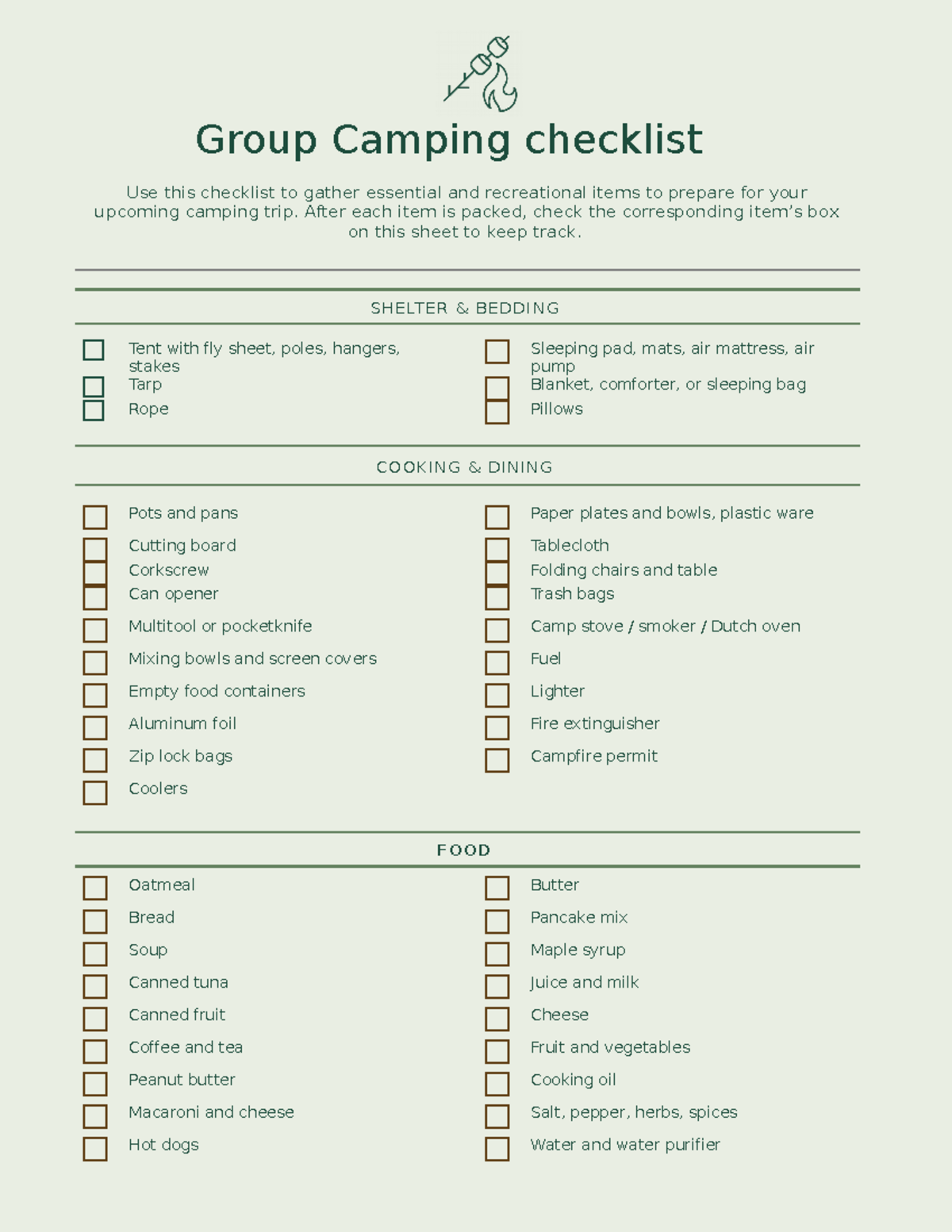
Quick Group Camping Checklist
Use this master list before you divide items among campers.
Shared shelter and camp gear
- Tent or group shelter
- Tent footprints or ground cloths
- Tent stakes and guylines
- Mallet or stake hammer
- Sleeping pads or cots
- Camp chairs
- Camp table, if the site has no picnic table
- Shade tarp or rain shelter
- Sleeping bags or blankets
- Extra blankets for cold nights
- Lanterns and spare batteries
- Headlamps for each person
- Camp stove and fuel
- Matches or lighters in a waterproof container
- Pots, pans, and cooking tools
- Plates, bowls, cups, and utensils
- Cutting board and knife
- Cooler and ice
- Food storage containers
- Water containers
- Hand-washing station
- Dish soap and scrubber
- Trash and recycling bags
- Paper towels or reusable towels
- Broom and dustpan
- Rope or clothesline
- Duct tape and repair tape
- Tarp clips or extra cord
- Camp shovel or trowel where permitted
- Firewood purchased near the campground, if fires are allowed
Personal camping gear
- Weather-appropriate clothing
- Warm layer
- Rain jacket or poncho
- Sleep clothes
- Hiking shoes or boots
- Camp shoes
- Wool or synthetic socks
- Hat and gloves for cool weather
- Sun hat
- Sunglasses
- Sunscreen
- Insect repellent
- Toiletries
- Prescription medicine
- Personal first-aid items
- Reusable water bottle
- Sleeping bag or personal blanket
- Sleeping pad
- Earplugs and sleep mask
- Identification
- Cash and payment card
- Phone and charging cable
- Portable battery pack
- Personal snacks
Safety and emergency gear
- First-aid kit
- Emergency blanket
- Map and compass
- Printed reservation and route details
- Weather radio or reliable weather app
- Whistle
- Extra food
- Extra water
- Water filter or purification tablets
- Fire extinguisher
- Multi-tool
- Work gloves
- Signal mirror
- Emergency contact list
- Copies of key medical information
- Vehicle emergency kit
- Jumper cables or portable jump starter
Before leaving home
- Check the reservation
- Confirm campground address and entrance rules
- Check the weather forecast
- Check fire restrictions
- Check road and trail conditions
- Confirm water access
- Confirm restroom access
- Charge phones and battery packs
- Fill fuel canisters only as permitted by the product instructions
- Freeze cooler items that can safely be frozen
- Pack food in sealed containers
- Tell someone at home where the group is going
- Set a return time for the trip leader to check in
The list is a starting point, not a rule. A two-night car-camping trip for six people may need a cooler and stove. A backpacking trip for six people needs lighter gear, smaller food packs, and a plan for carrying every item.
How to Divide Camping Gear Among a Group
Assign shared gear by weight, space, and responsibility. Do not ask one person to carry all the food, another to carry all the shelter, and a third to carry all the safety gear unless the group has a clear vehicle plan.
A simple system uses five roles:
- Shelter lead: tents, tarps, stakes, and repair supplies.
- Kitchen lead: stove, fuel, cookware, utensils, and food.
- Water lead: containers, filters, purification supplies, and water plan.
- Safety lead: first aid, maps, emergency contacts, and weather checks.
- Cleanup lead: trash bags, soap, towels, and food storage.
Each person still packs their own clothing, sleep system, medicine, and light.
Use a shared packing sheet
Create one list with these columns:
| Item | Quantity | Owner | Packed | Backup needed |
|---|---|---|---|---|
| Four-person tent | 2 | Alex | Yes/No | No |
| Camp stove | 1 | Jordan | Yes/No | Fuel |
| First-aid kit | 1 | Casey | Yes/No | Personal medicines |
| Water container | 4 | Sam | Yes/No | Filter |
| Lantern | 2 | Riley | Yes/No | Batteries |
Mark an item as packed only after the owner places it in the vehicle or group pack. This prevents the common “I thought someone else had it” problem.
Pack duplicates of critical items
Some items deserve a backup:
- Lighters or fire starters
- Headlamps
- Water treatment
- Navigation tools
- Phone power
- Rain protection
- First-aid supplies
- Shelter repair materials
Do not duplicate every item. Two can openers are useful, but two full stoves may waste space unless the group needs separate cooking areas.

How Much Food and Water Does a Group Need?
Plan food by person, meal, and trip length. A simple car-camping estimate is:
Total servings = number of people × number of meals × servings per person
For example, six campers staying for two nights may need:
- Six breakfasts
- Six lunches
- Six dinners
- Twelve or more snacks
- Extra food for delays or a missed meal
The exact amount depends on age, activity, weather, and appetite. Hiking and cold weather can raise food needs. Pack at least one extra meal for a remote trip or a route where delays are possible.
A practical group food plan
| Meal | Easy group options |
|---|---|
| Breakfast | Oatmeal, eggs, tortillas, fruit, coffee |
| Lunch | Wraps, bagels, tuna packets, cheese, trail mix |
| Dinner | Chili, pasta, rice bowls, stew, foil packets |
| Snacks | Nuts, dried fruit, bars, crackers, jerky |
| Emergency meal | Shelf-stable soup, instant rice, beans, or meal bars |
Ask about allergies and food limits before shopping. Keep allergy-safe foods sealed and separate when needed. Label shared meals so people know what they contain.
Water planning
Water needs change with heat, exercise, altitude, and access. For day trips, many people carry enough water for the outing plus extra for delays. At camp, water also goes to cooking, drinking, hand washing, and cleaning.
If a campground has a marked potable-water spigot, confirm that it works before relying on it. For backcountry trips, check the land manager’s rules and use a suitable filter or treatment method. A filter may not remove every type of contaminant, so follow the product instructions and local guidance.
Never assume a clear stream is safe to drink. Natural water can contain organisms that cause illness.
Cooler and food storage tips
- Chill food before packing it.
- Put drinks in a separate cooler if the food cooler must stay cold.
- Keep raw meat sealed and separate from ready-to-eat food.
- Use leak-proof containers.
- Keep the cooler in shade when possible.
- Open it only when needed.
- Follow local bear and wildlife storage rules.
- Do not leave food or scented items in a tent.
The National Park Service and many state and federal land agencies require specific food-storage practices in bear country. Follow the rules for the exact campground, not a general rule from another park.

Clothing and Personal Items for Group Camping
Pack layers instead of one heavy outfit. A base layer moves sweat away from the skin, an insulating layer adds warmth, and an outer layer blocks wind or rain.
For most U.S. camping trips, each person should consider packing:
- Two or three shirts
- One warm layer
- One rain layer
- Two or three pairs of socks
- Two pairs of underwear per day for active trips
- Long pants
- Shorts when suitable
- Sleep clothes
- Sturdy shoes
- Camp shoes
- Hat
- Sun protection
- Small towel
- Toiletries
- Personal medicine
- Personal snacks
- Reusable bottle
Cold, wet, or high-elevation trips need more insulation. Hot trips need breathable clothing, sun protection, and more water. Desert nights can be cold even when daytime temperatures are high.
Cotton can stay wet for a long time. For cool or wet trips, wool or synthetic layers often dry faster. Keep one dry layer reserved for sleeping.
Personal medical needs
A group first-aid kit does not replace personal medicine. Each camper should carry enough prescription medicine for the trip, plus a small reserve when a delay is possible. Keep medicine in its labeled container and protect it from heat or moisture as directed.
Tell the trip leader about serious allergies, asthma, diabetes, severe reactions, or other conditions when the camper is comfortable sharing that information. The group should know where emergency supplies are stored and how to reach emergency services.

Camping Kitchen Checklist
A group kitchen works best when cooking, serving, washing, and food storage are separate jobs.
Cooking equipment
- Stove
- Correct fuel
- Lighter and backup fire starter
- Pot with lid
- Frying pan
- Tongs
- Spoon or spatula
- Knife
- Cutting board
- Measuring cup
- Can opener
- Heat-resistant gloves
- Pot holder
Serving equipment
- Plates or bowls
- Cups
- Forks, spoons, and knives
- Serving spoon
- Mugs
- Reusable napkins
Washing and cleanup
- Water container
- Biodegradable soap where allowed
- Scrub pad
- Small basin
- Clean towels
- Trash bags
- Food-scrap container
- Hand sanitizer
- Paper towels
Check local rules before using soap near a lake, stream, or river. “Biodegradable” does not mean soap can be used directly in natural water.
Safe stove and fire practices
Use camping stoves outdoors and follow the manufacturer’s instructions. Never use a fuel-burning stove, lantern, or heater inside a tent, vehicle, or enclosed shelter because carbon monoxide can build up without warning.
Build a campfire only where fires are allowed. Use the existing fire ring when provided. Keep water nearby, watch the fire, and put it out until the coals are cool. The U.S. Forest Service, National Park Service, and local land managers may impose fire bans during dry conditions.

Shelter and Sleep System Checklist
Choose shelter based on the number of people, weather, privacy needs, and campsite rules. A tent’s advertised capacity often counts bodies, not bags, pets, or personal gear. For comfort, many groups use a tent rated for more people than the number sleeping inside.
For each tent, pack:
- Tent body
- Rainfly
- Poles
- Stakes
- Guylines
- Footprint or ground cloth
- Repair tape
- Pole sleeve or repair splint
Keep the tent door away from the main direction of wind when practical. Avoid low ground where water may collect. Do not pitch under dead branches, sometimes called widowmakers.
Each camper needs:
- Sleeping bag or blanket rated for expected conditions
- Sleeping pad or cot
- Pillow or packed clothing
- Sleep clothes
- Earplugs if the group includes light sleepers
A sleeping bag rating is not a promise of comfort for every person. Age, clothing, pad insulation, wind, moisture, and personal tolerance affect warmth. Use a suitable pad beneath the sleeping bag because the ground can draw heat away from the body.

Group Camping Safety Checklist
Safety planning should begin before the group leaves home. Share the route, campground name, expected arrival time, vehicle details, and return time with a trusted person.
Weather and natural hazards
Check the forecast for the exact area and elevation. Watch for:
- Thunderstorms
- Flash flooding
- High winds
- Extreme heat
- Snow or freezing temperatures
- Wildfire smoke
- Coastal storms
- High water
- Poor road conditions
A weather forecast can change quickly in mountains and deserts. Bring shelter and clothing for the conditions that may occur, not only the conditions expected at noon.
If lightning approaches, move away from exposed ridges, isolated trees, water, and metal objects. Follow local emergency instructions. If flooding threatens, move to higher ground early.
Wildlife and food storage
Keep food, trash, toiletries, and scented items stored as the local land manager requires. A vehicle may be acceptable in some areas and prohibited in others. In bear country, use approved lockers or bear-resistant containers when required.
Do not feed wildlife. Keep a safe distance from animals, and do not approach young animals. Store pet food with other scented items.
Fire and carbon monoxide
Carbon monoxide is an invisible, odorless gas produced by fuel-burning devices. Do not use stoves, lanterns, grills, or heaters in tents, vehicles, cabins without proper ventilation, or other enclosed areas.
Keep fuel away from heat and flames. Let fuel-burning equipment cool before packing it. Follow the fuel container and stove instructions.
Water and heat illness
Heat illness can start with headache, weakness, nausea, dizziness, or heavy sweating. Move the person to shade, cool them, and give fluids if they are alert and able to drink. Confusion, fainting, seizures, or loss of consciousness require urgent emergency help.
Do not wait until someone feels thirsty during a hot hike. Plan shade breaks and carry enough water for the route, weather, and possible delay.

Leave No Trace and Campground Rules
A responsible group leaves the site clean and avoids damage. The seven Leave No Trace principles provide a useful framework:
- Plan ahead and prepare.
- Travel and camp on durable surfaces.
- Dispose of waste properly.
- Leave what you find.
- Minimize campfire impacts.
- Respect wildlife.
- Be considerate of other visitors.
Use toilets when available. Pack out toilet paper and hygiene products where local rules require it. In backcountry areas, follow the land manager’s instructions for human waste.
Keep noise low, especially during quiet hours. Do not cut live trees for firewood. Buy firewood near the campground when required to reduce the spread of pests and disease.
Rules vary across national parks, national forests, Bureau of Land Management areas, state parks, and private campgrounds. Check the official website for the exact location before departure.

Group Camping Checklist by Trip Type
The best checklist changes with the trip.
| Trip type | Add or prioritize | Main concern |
|---|---|---|
| Car camping | Cooler, chairs, large shelter, full kitchen | Weight and storage |
| Backpacking | Lightweight shelter, compact stove, water treatment | Pack weight |
| Family camping | Extra clothing, child-safe items, comfort gear | Supervision and routines |
| Winter camping | Insulated sleep system, stove plan, dry layers | Cold and moisture |
| Beach camping | Shade, wind anchors, fresh water, sand-resistant storage | Sun, wind, and salt |
| Desert camping | Extra water, shade, warm layers, navigation | Heat and isolation |
| Group campground | Quiet-hour plan, labeled gear, shared meals | Space and coordination |
| Camping with dogs | Leash, waste bags, water bowl, pet first aid | Local pet rules |
Camping with children
Bring familiar sleep items, extra clothes, simple snacks, and a clear bathroom plan. Assign an adult to supervise near water, roads, cliffs, and fires. Do not assume older children will notice hazards that adults can see.
Camping with dogs
Check whether pets are allowed and whether they must remain leashed. Pack food, water, a bowl, leash, waste bags, identification, medications, and a towel. Watch for hot pavement, sharp plants, ticks, and wildlife.
A Simple Packing Timeline
One week before
- Confirm the reservation.
- Check weather and fire rules.
- Ask about allergies and dietary needs.
- Assign gear owners.
- Plan meals.
- Check tents, stove, fuel, lights, and water equipment.
- Arrange transportation and carpooling.
One day before
- Charge devices.
- Fill water containers.
- Pack dry food.
- Chill the cooler.
- Load the first-aid kit.
- Print directions and reservation details.
- Tell an emergency contact the trip plan.
- Check road and campground updates.
At the campsite
- Inspect the site for hazards.
- Set up shelter before dark.
- Mark the kitchen and food-storage area.
- Identify the restroom and water source.
- Review fire rules and quiet hours.
- Keep an emergency light easy to reach.
- Store food before bedtime.
- Confirm the next day’s plan.
Before leaving
- Check under vehicles and around tents.
- Pack all food and trash.
- Put out the fire completely.
- Close or clean the fire ring as required.
- Check for small items such as stakes, cords, and wrappers.
- Return borrowed gear.
- Report damage or hazards to the campground host.

Common Group Camping Mistakes
Packing without ownership
A shared list fails when no one owns the final check. Assign a person to every shared item and ask that person to confirm it.
Bringing too much food
Large menus create waste and require more cooling and cleanup. Choose meals that share ingredients and can handle a delayed dinner.
Forgetting water treatment
A campground may have water service, but a remote site may not. Confirm the source before the trip and carry a backup treatment method when needed.
Relying on a phone for everything
Phones can lose power or signal. Bring a paper map, battery pack, and a clear emergency plan.
Ignoring sleep space
A tent may fit six people on paper but leave little room for gear or movement. Consider comfort, weather, and privacy when choosing shelter.
Using fire as the only light
A fire does not light the path to the restroom well and may be banned. Give every person a headlamp or flashlight.
Failing to plan for rain
Rain can turn a pleasant trip into a cold one. Pack waterproof layers, a dry sleep layer, shelter protection, and a way to keep wet gear separate.
Leaving food in a tent
Food and scented items can attract animals and create a safety risk. Follow local storage rules and keep food away from sleeping areas.

Frequently Asked Questions
How many tents do I need for a group?
Use the tent’s actual sleeping capacity, then account for comfort, gear, weather, and privacy. A group of six may use two three-person tents, one six-person tent, or a larger shelter with separate sleeping spaces. Multiple tents can improve privacy and reduce the effect of one damaged shelter.
What should each person bring to a group camping trip?
Each person should bring clothing, sleep gear, personal medicine, toiletries, a water bottle, rain protection, shoes, and a headlamp. Shared items such as tents, cookware, food, and first aid should be assigned to specific people.
How do you plan food for a large camping group?
Count people and meals, then add snacks and at least one backup meal for trips where delays are possible. Ask about allergies before shopping. Choose simple meals that use overlapping ingredients and need little refrigeration.
What should I do if the group forgets an essential item?
Stop and assess whether the item affects safety. Do not improvise with fuel, shelter, medicine, navigation, or water treatment unless the alternative is known to be safe. Change the route, buy a replacement, or cancel the activity if the missing item creates an unacceptable risk.
How do I keep a group camping trip organized?
Use one shared checklist, assign an owner to each item, set a packing deadline, and review the list before leaving. At camp, assign cooking, water, cleanup, fire, and food-storage duties. A short group briefing can prevent confusion.
Final Group Camping Checklist
Before departure, confirm these five points:
- Shelter: Everyone has a dry place to sleep.
- Water: The group has enough water or a safe treatment plan.
- Food: Meals, snacks, dietary needs, and storage are covered.
- Safety: First aid, lights, navigation, weather, and emergency contacts are ready.
- Rules: The group knows fire, wildlife, pet, waste, and quiet-hour rules.
The most useful camping checklist for a group is clear, assigned, and suited to the location. Check the official campground or land-management website, review the forecast, and make one person responsible for the final safety check before the vehicle leaves.