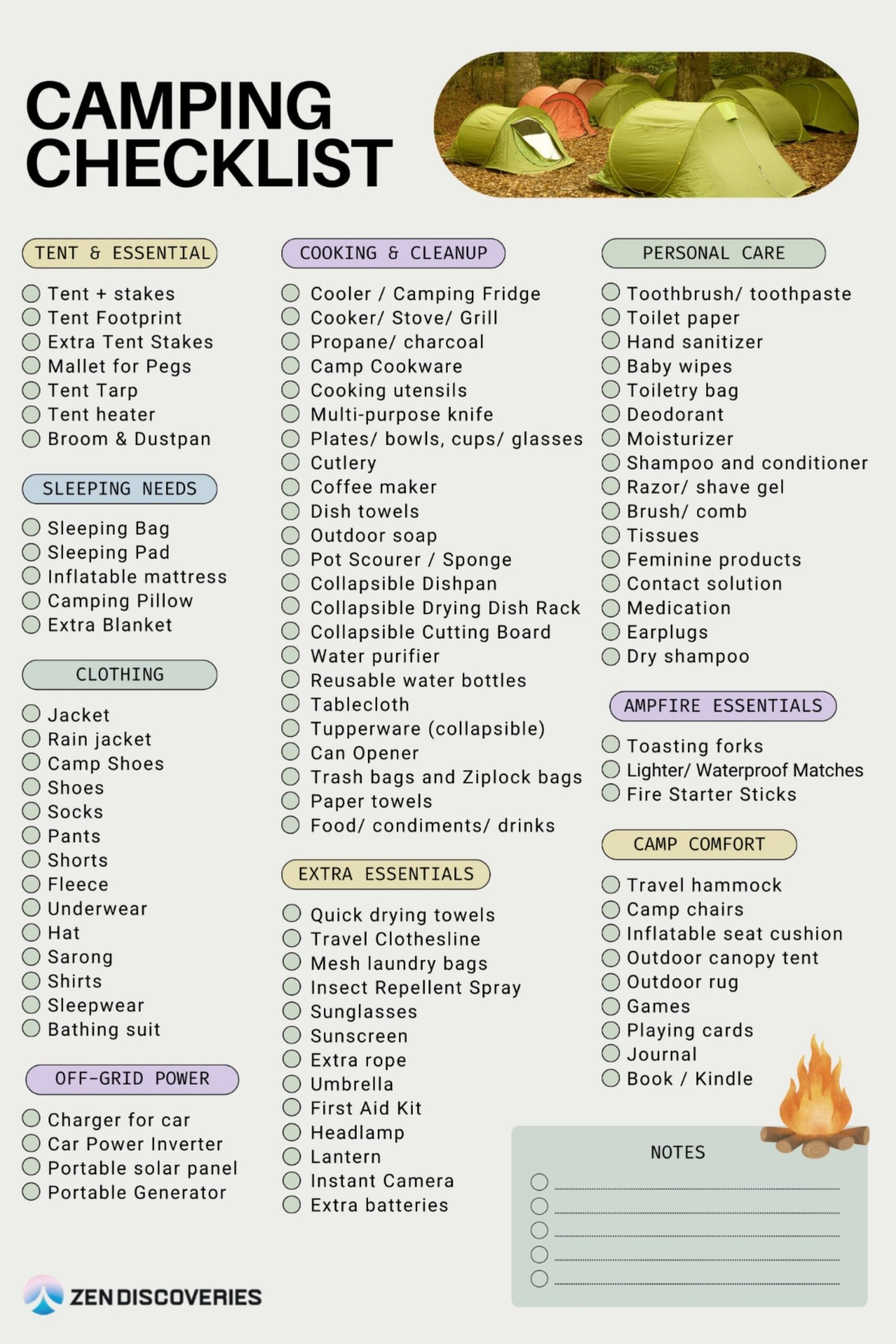
A camping bin checklist helps you pack gear by use, protect supplies from rain and dirt, and find key items fast at camp. For most car-camping trips in the United States, use separate bins for cooking, food, camp tools, hygiene, and emergency gear. Keep a small first-aid kit, water, light, and weather gear easy to reach—not buried under heavy boxes.
The best setup depends on your campsite, trip length, season, group size, and local rules. A developed campground near a town needs less gear than a remote site in bear country or a desert area with no water source.

Camping Bin Checklist at a Glance
Use this core checklist for a weekend car-camping trip in the United States. Remove items that do not fit your site or add gear for weather, pets, children, or remote travel.
Cooking and Kitchen Bin
- Two-burner camping stove or approved cooking system
- Fuel canisters or propane, plus the correct adapter if needed
- Lighter and waterproof matches
- Small pot with lid
- Frying pan
- Cutting board
- Camp knife
- Tongs, spoon, spatula, and serving tool
- Plates, bowls, cups, and utensils
- Coffee or tea supplies
- Can opener
- Measuring cup or small food scoop
- Foil or reusable food containers
- Pot holders or heat-safe gloves
- Dish soap
- Sponge or scrub pad
- Small dish towel
- Collapsible basin
- Trash bags
- Paper towels or reusable cloths
- Hand sanitizer
Pack fuel outside the living area and follow the stove maker’s instructions. Never use a fuel-burning stove, lantern, or heater inside a tent, vehicle, or other enclosed space because carbon monoxide can build up without warning.
Food and Water Bin
- Meal plan
- Breakfast food
- Lunch food
- Dinner food
- Snacks
- Coffee, tea, or drink mix
- Salt, pepper, oil, and basic seasonings
- Drinking water
- Water jug for washing
- Cooler or powered refrigerator, if needed
- Ice or frozen cold packs
- Bear-resistant food storage, where required
- Food labels or a simple meal list
- Reusable bags or sealed containers
Keep food, trash, toiletries, and scented items stored as required by the land manager. In bear country, a tent is not a food-storage area. Rules differ among national parks, national forests, state parks, and private campgrounds, so check the official site before you leave.
Camp Tools and Repair Bin
- headlamps
- Spare batteries or charged battery packs
- Multi-tool
- Duct tape
- Strong cord or rope
- Paracord, if useful for your setup
- Tent repair patches
- Sleeping pad repair kit
- Small tarp repair tape
- Zip ties
- Work gloves
- Mallet or hammer
- Tent stakes
- Spare stakes
- Small shovel or trowel, where permitted
- Broom and dustpan
- Fire starter
- Waterproof storage bags
- Power bank and charging cables
- Printed reservation and route details
Do not bring a saw, axe, or digging tool unless you know it is allowed and you can use it safely. Many public lands limit firewood transport, ground disturbance, and collection of natural materials.
Hygiene and Personal Care Bin
- Toilet paper
- Hand sanitizer
- Biodegradable soap for approved washing areas
- Toothbrush and toothpaste
- Small towel
- Wet wipes
- Menstrual products
- Sunscreen
- Insect repellent
- Lip balm
- Prescription medicine
- Spare glasses or contact supplies
- Quick-dry clothes
- Dirty-clothes bag
- Personal medications in a waterproof pouch
Use soap only where the campground or land manager allows it. “Biodegradable” soap still harms waterways when used directly in lakes, streams, or rivers.
First-Aid and Emergency Bin
- Adhesive bandages
- Gauze pads
- Medical tape
- Antiseptic wipes
- Tweezers
- Blister care
- Elastic wrap
- Disposable gloves
- Pain medicine that you normally use safely
- Allergy medicine, if needed
- Any prescribed emergency medicine
- Cold pack
- Thermometer
- Emergency blanket
- Whistle
- Paper map
- Compass
- Emergency contact list
- Copies of key documents
A first-aid kit does not replace training or emergency care. For remote trips, plan how you will call for help, leave the area, and reach the nearest clinic. Download maps before travel because cell service may not work.

How to Organize Camping Bins
Organize bins by task, not by item type alone. You should be able to pull out the cooking bin without opening the clothing bin or moving the tent.
A simple system uses five labels:
- Kitchen: cooking tools and cleaning supplies
- Food: dry food, snacks, and sealed ingredients
- Camp: lights, tools, repairs, and fire supplies
- Hygiene: personal care and toilet supplies
- Emergency: first aid, navigation, and backup power
Use clear labels on the lid and two sides of each bin. A list taped inside the lid can show what belongs in that box. This makes restocking easier after the trip.
Put High-Use Items Near the Top
Place headlamps, rain gear, first aid, toilet paper, and hand sanitizer where you can reach them first. Keep heavy cookware low and close to the center of the vehicle. Store sharp tools in sheaths or closed cases.
Keep the first-aid and emergency bins separate from general camp tools. A red label or bright tape makes them easier to find at night or during bad weather.
Choose the Right Bin Size
Large plastic bins hold more gear, but they also become heavy and hard to carry. Two or three medium bins often work better than one oversized box.
A practical target is a bin that one adult can lift without twisting or straining. If a box feels too heavy at home, it will feel worse after a long drive or on uneven ground.
Use waterproof or water-resistant containers for items that must stay dry. A plastic tote is not automatically waterproof. Test the lid before trusting it with medication, electronics, or matches.
Keep One “First 10 Minutes” Bag
Pack a small bag for arrival and departure. It can hold:
- Headlamp
- Gloves
- Tent stakes
- Mallet
- Rain shell
- Water
- Small trash bag
- Reservation details
- Sunscreen or insect repellent
This prevents a common problem: opening every box while trying to set up camp in the dark or rain.

What Goes in a Camping Bin Versus a Backpack?
Camping bins are best for car camping, drive-up sites, and base camps. Backpacks are better for hiking or any trip where you must carry all supplies over a distance.
Use Bins for Bulky Camp Gear
Pack these items in bins:
- Cookware
- Food supplies
- Cleaning tools
- Lanterns and spare batteries
- Repair gear
- Camp chairs
- Games and comfort items
- Toiletries
- Extra clothing
Bins protect loose items from dirt and help keep the vehicle organized. They also make it easier to unload food and cooking gear at the same time.
Use a Backpack or Day Bag for Immediate Needs
Keep these items in a small backpack:
- Water
- First aid
- Map and phone
- Headlamp
- Rain layer
- Sunscreen
- Insect repellent
- Snacks
- Personal medicine
- Identification and emergency contacts
For backpacking, replace large bins with lightweight dry bags or stuff sacks. Weight matters more than stackability, and rigid boxes can waste pack space.

Camping Bin Checklist by Trip Type
The right checklist changes with the campsite. A developed campground, dispersed public-land site, and winter camp have different needs and rules.
| Trip type | Add or prioritize | Main concern |
|---|---|---|
| Developed campground | Reservation details, quarters or payment method, comfort items | Site rules and shared facilities |
| Dispersed camping | Extra water, paper map, shovel where legal, more repair gear | No services and weak cell coverage |
| Beach or coastal camping | Wind stakes, tarp, sand brush, fresh water | Wind, salt, and limited shade |
| Desert camping | Extra water, sun protection, shade, electrolyte drinks | Heat and rapid dehydration |
| Mountain camping | Warm layers, weatherproof shelter, navigation tools | Cold, storms, and changing weather |
| Winter camping | Four-season shelter if needed, insulated pads, cold-rated sleep system | Hypothermia, frostbite, and fuel limits |
| Camping with children | Extra clothes, simple snacks, lights, comfort item | Fast messes and changing needs |
| Camping with dogs | Leash, waste bags, bowl, towel, tick check tools | Wildlife, heat, and local pet rules |
Do not use a general checklist as proof that a site is safe or legal. Check the official campground or land-management page for fire restrictions, water status, food storage rules, pets, quiet hours, generators, and road access.

How Much Food and Water Should You Pack?
Plan food by person and meal, then add a small backup supply. A simple method is:
Total meals = number of people × number of days × meals per day
For example, three people on a two-night trip may need three days of food:
3 people × 3 days × 3 meals = 27 meal portions
This is a planning count, not a calorie rule. Add snacks and account for children, high activity, weather, and dietary needs.
Water needs vary with heat, exercise, age, health, and available facilities. The Centers for Disease Control and Prevention advises travelers to use safe drinking water and treat uncertain water. Do not assume a clear stream is safe.
Before leaving, confirm:
- Whether the campground has potable water
- Whether water spigots are seasonal
- Whether a filter removes the contaminants you may face
- Whether boiling or chemical treatment is needed
- How much water you need for cooking and cleaning
- Whether local rules restrict collecting water
If you use a filter, check its documented limits. Many filters do not remove viruses, chemicals, or salt. Follow the device instructions and use a backup method when the maker or local authority recommends one.

Campground Safety Rules for Your Bins
A well-packed bin can reduce risk, but it cannot replace site awareness.
Fire Safety
Check current fire restrictions before packing firewood, charcoal, or a stove. Use only approved fire rings or cooking areas. Keep water nearby when fires are allowed, and put the fire fully out before leaving or sleeping.
The National Park Service and federal land agencies commonly require visitors to follow local fire regulations. Rules can change with drought, wind, and wildfire conditions.
Food and Wildlife
Store food and scented products according to local wildlife rules. These items may include:
- Food and drinks
- Trash and recycling
- Toothpaste
- Lotion and sunscreen
- Soap
- Deodorant
- Pet food
- Cooking grease
Never feed wildlife. Clean cooking surfaces after use and keep food waste out of the tent.
Weather and Carbon Monoxide
Check the forecast for the exact camping area, not only the nearest city. Bring a shelter plan for rain, wind, heat, or cold. Do not rely on a tarp as a substitute for a safe sleeping shelter in severe weather.
Never run a generator, stove, lantern, or fuel-burning heater inside a tent, vehicle, cabin, or other enclosed space. Carbon monoxide is an odorless gas that can cause sudden illness or death.

Common Camping Bin Mistakes
The most common packing errors are not forgotten luxuries. They are poor access, excess weight, and failure to match gear to the site.
Packing One Giant Bin
One large bin may seem simple, but it can become too heavy and hide critical items. Split supplies by task. This also lets one person cook while another sets up camp.
Mixing Food With Chemicals
Keep fuel, cleaners, insect repellent, and other chemicals away from food. Use separate bins and sealed containers. Do not place fuel canisters where they can roll, leak, or heat up.
Forgetting the Campground Rules
A checklist cannot tell you whether a fire is allowed or whether food must go in a locker. Verify the rules for the exact location and date.
Packing Only for Good Weather
Bring at least one warm layer and one rain layer, even when the forecast looks clear. Mountain and desert weather can change quickly. Store these items where you can reach them without unpacking the vehicle.
Leaving No Space for Trash
Plan for every wrapper, can, wipe, and food scrap. A few spare trash bags weigh little and prevent loose waste from spreading around camp.
Failing to Restock
After the trip, dry wet gear, wash cookware, replace used first-aid items, recharge batteries, and update the checklist. A bin is useful only when it is ready for the next trip.

Printable Camping Bin Checklist
Copy this short version into a notes app or print it before packing.
Before Leaving Home
- Check the campground reservation
- Review weather and fire restrictions
- Check road and water conditions
- Confirm food-storage rules
- Charge phones and power banks
- Refill prescriptions
- Pack enough food and safe water
- Tell someone your route and return plan
Kitchen and Food
- Stove and correct fuel
- Lighter and backup matches
- Pots, pan, utensils, and plates
- Food and snacks
- Cooler and ice
- Water
- Soap, basin, sponge, and towels
- Trash bags
- Food-storage container
Shelter and Sleep
- Tent
- Tent poles and stakes
- Ground cloth
- Sleeping bags or blankets
- Sleeping pads
- Pillow
- Rain fly or tarp
- Extra warm layer
Camp and Emergency
- Headlamps
- Batteries
- First-aid kit
- Medication
- Map and compass
- Phone and power bank
- Repair kit
- Fire supplies, if legal
- Emergency contact details
Personal and Departure
- Toiletries
- Sunscreen
- Insect repellent
- Toilet paper
- Hand sanitizer
- Extra clothing
- Pet supplies, if needed
- Pack-out trash bags
- Clean and check the site before leaving

Key Takeaways
- Use separate bins for cooking, food, camp tools, hygiene, and emergencies.
- Keep first aid, water, lights, medicine, and weather gear easy to reach.
- Check local rules for fire, food storage, water, pets, and firewood.
- Do not use fuel-burning devices inside tents, vehicles, or enclosed spaces.
- Pack for the actual site, season, group, and travel distance.
- Restock each camping bin after every trip.
Frequently Asked Questions
What size camping bin is best?
Medium bins are usually easier to lift, carry, and organize than one large bin. Choose a size that one adult can move safely. Use a waterproof container for gear that must stay dry, and test the lid before relying on it.
Should food go in a camping bin?
Dry food can go in a sealed camping bin when local rules allow it. In bear country or other wildlife areas, use the required bear-resistant container, food locker, or vehicle storage method. Never store food in a tent.
How many camping bins do I need?
Most car campers can start with four or five bins: kitchen, food, camp tools, hygiene, and emergency gear. Add a separate clothing or child-care bin if your group needs one.
Can I use a regular plastic tote as a waterproof camping bin?
A regular tote may resist light splashes but is not always waterproof. Keep medication, electronics, matches, and clothing in sealed bags inside the tote unless the container has a tested waterproof design.
What should I leave out of a camping bin?
Leave out gear that does not match the site or rules, such as an axe where cutting is prohibited, a generator at a quiet campground, or excess cooking equipment for a simple overnight trip. Pack for the conditions rather than for every possible problem.
How do I keep camping bins from smelling?
Remove food residue at once, wash and dry the bin, and store it with the lid slightly open when it is not in use. Keep trash and strong scents out of long-term storage. Replace damaged seals and contaminated liners.
Conclusion
A camping bin checklist works best when it makes camp safer, faster, and easier to clean. Start with separate bins for food, cooking, tools, hygiene, and emergencies. Then adjust the list for the U.S. location, season, weather, wildlife, and local regulations.
Before you load the vehicle, review the site rules and place your first-aid kit, water, lights, medicine, and rain gear where you can reach them first. After the trip, clean and restock each bin so the next departure takes less time.